
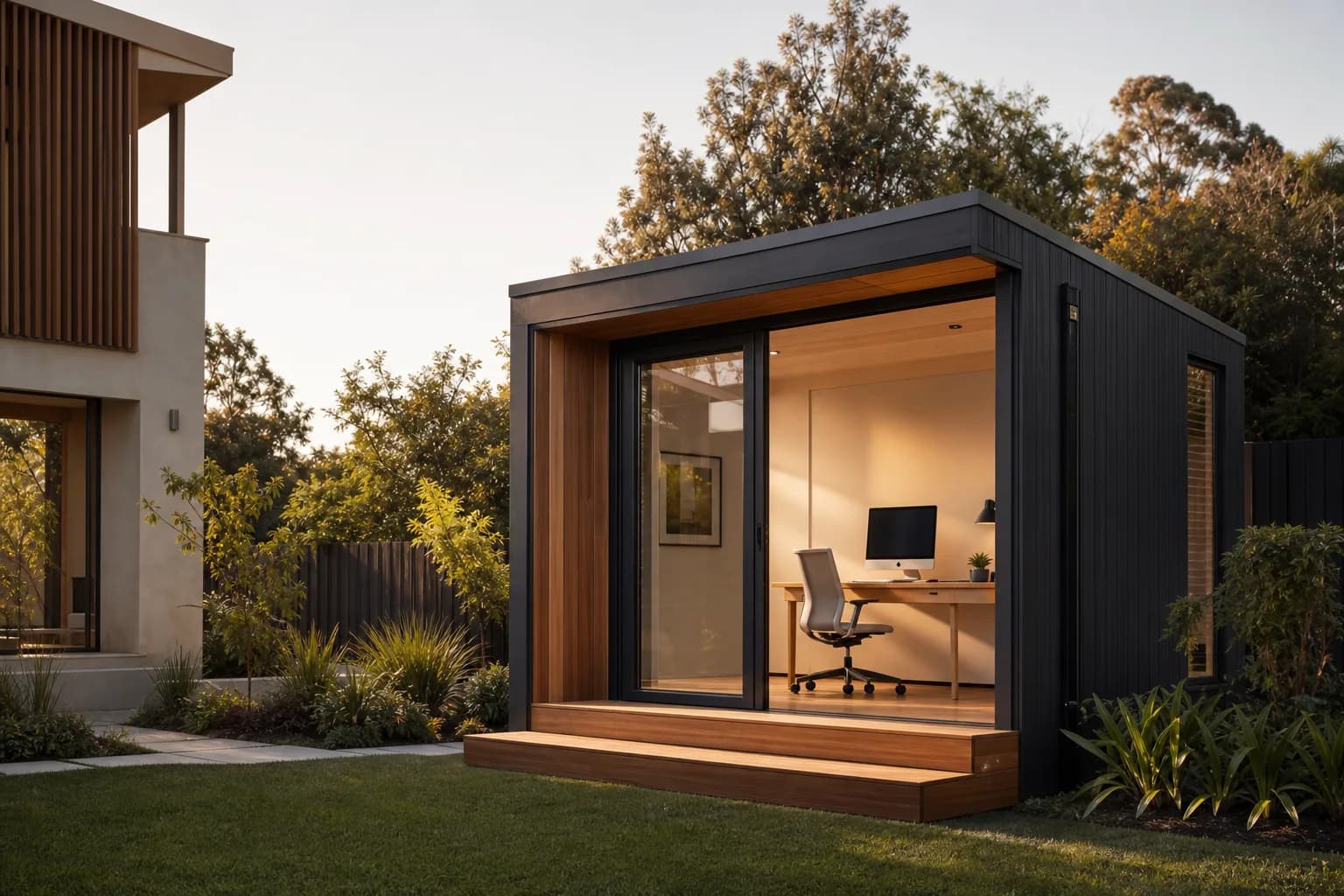
It's one of the most common questions people ask once they've fallen for the idea of a backyard pod: "Could someone actually live in it?" Maybe as a guest room, a rental, a space for an ageing parent or an adult child. The short answer is nuanced — a pod can become a dwelling, but the moment it does, everything about it changes: the approval, the standards it's built to, and often the cost. This guide explains exactly where the line sits, so you know what you're buying before you buy it.
The short answer
A standard backyard office pod is not approved as a dwelling — but a pod built to the right standard, with the right approval, can be a habitable secondary dwelling.
The distinction comes down to a single question: is the structure built and approved as habitable, or not? An office pod is typically a non-habitable structure — fine for working, not lawful for sleeping. A habitable dwelling is built to a higher standard and approved for people to live in. They can look identical from the outside and be completely different things legally.
What makes a structure "habitable"
In Australian building terms, "habitable" isn't about comfort — it's a legal classification with real consequences.
A non-habitable structure (like a standard office pod, studio or shed) is generally classified as Class 10a under the National Construction Code — the same broad category as a garage or garden shed. It can be insulated, powered and beautifully finished, but it is not approved for someone to live in.
A habitable dwelling is classified as Class 1a — the same as a house. To earn that classification it must meet the standards a home meets: energy efficiency, ventilation, natural light, fire safety, and (critically) proper plumbing for a bathroom and often a kitchen.
The gap between the two isn't cosmetic. It's the difference between a structure you can work in and a structure a person can lawfully sleep in, that a bank will value, and that a council will approve as accommodation.
The moment a pod becomes a dwelling: plumbing
If there's one trigger that turns an office pod into a dwelling question, it's plumbing.
Add a bathroom or a kitchen, and the structure is almost always treated as habitable — because you've built something a person can live in, not just work in. That reclassification changes everything downstream:
- 01It moves from Class 10a (non-habitable) to Class 1a (habitable dwelling)
- 02It must meet residential building standards, including energy efficiency (7-star NatHERS in most states)
- 03It usually requires a different, more thorough approval pathway
- 04It typically requires separate plumbing approval for the water and wastewater connection
This is why a "backyard office pod" and a "backyard granny flat" can be the same size and shape but sit in completely different regulatory worlds. The bathroom is the line.
If you want a pod you can live in: the secondary dwelling path
The good news: if what you actually want is a small dwelling in your backyard — for a rental, a guest, or family — that's a well-established, approvable thing. It's called a secondary dwelling (or granny flat), and a modular pod built to Class 1a standard is a common way to create one.
The size rules that keep it on the streamlined pathway vary by state:
| State | Max secondary dwelling size | Planning permit? |
|---|---|---|
| NSW | 60m² | No — CDC pathway available |
| VIC | 60m² | No — if no overlays, lot >300m² |
| QLD | 80m² (most SEQ councils) | No — Accepted Development if compliant |
| WA | Varies by R-Code zone | Planning + building approval |
| SA | Varies by council | Development approval |
Built to this standard, a backyard dwelling can be rented to anyone, adds real value to your property, and is treated by banks and valuers as part of your home — none of which is true of a non-habitable office pod.
Office pod vs habitable dwelling: the honest comparison
| Backyard office pod | Habitable secondary dwelling | |
|---|---|---|
| Classification | Class 10a (non-habitable) | Class 1a (habitable) |
| Can you live in it? | No | Yes |
| Bathroom / kitchen | No (or triggers reclassification) | Yes |
| Can you rent it out? | No (not as accommodation) | Yes |
| Adds assessed property value | Limited | Yes |
| Approval | Often simpler / exempt | Secondary dwelling pathway |
| Best for | Home office, studio, gym | Guest, rental, family living |
Neither is "better" — they're built for different jobs. The mistake is buying one expecting it to do the other's job.
The mistake to avoid
The expensive mistake is buying a cheaper, non-habitable office pod and assuming you can quietly live in it, rent it out, or convert it later. You generally can't — not lawfully, not in a way a bank or council will recognise, and not without potentially re-doing the approval and the build to a higher standard.
If you only need a workspace, an office pod is perfect and often the simpler approval. If there's any chance you'll want someone to live in the space — now or later — it's worth building it as a habitable dwelling from the start. Retrofitting habitability into a non-habitable structure is almost always more expensive than building it right the first time.
The honest question to ask yourself is simple: is this for working, or for living? Your answer decides which structure you actually need.
Frequently asked questions
Can you legally live in a backyard office pod in Australia?
Generally no. A standard office pod is classified as a non-habitable structure (Class 10a), which is not approved for someone to live in. To lawfully live in a backyard structure, it needs to be built and approved as a habitable dwelling (Class 1a) — typically as a secondary dwelling or granny flat, which meets residential standards and has proper plumbing.
What's the difference between an office pod and a granny flat?
An office pod is usually a non-habitable structure for working, studying or storage — not approved for living in. A granny flat is a habitable secondary dwelling, built to residential standards with a bathroom and kitchen, approved for someone to live in and rent out. They can look similar but are classified and approved differently.
Can I add a bathroom to a backyard office pod?
You can, but doing so usually reclassifies the structure as a habitable dwelling rather than a non-habitable office. That changes the approval pathway and the building standards it must meet, including residential energy efficiency and plumbing approval. If you want a bathroom, it's usually best to build it as a habitable dwelling from the start.
Can a modular pod be a secondary dwelling?
Yes. A modular pod built to Class 1a habitable standard is a common way to create a secondary dwelling (granny flat). Size limits vary by state — 60m² in NSW and Victoria, up to 80m² in most South East Queensland councils — and staying within them usually keeps the project on the streamlined approval pathway.
Is it cheaper to buy an office pod or a granny flat?
An office pod is generally cheaper upfront because it's non-habitable and built to a lower standard. But it can't be lived in or rented, and doesn't add property value the way a habitable dwelling does. If you need somewhere to live rather than work, a granny flat is better value despite the higher upfront cost — and cheaper than retrofitting a pod later.
The bottom line
A backyard pod can absolutely be somewhere to live — but only if it's built and approved as a habitable dwelling from the start. The line between an office pod and a granny flat isn't the size or the look; it's the classification, the plumbing and the approval behind it. Decide whether you're building for working or for living, and you'll know which one you actually need.
A ModuHaus Planning Assessment helps you get that decision right before you commit — matching you to a non-habitable pod or a habitable secondary dwelling based on what you actually want the space to do.
**Start your Planning Assessment →**
This article is general information only and not legal or planning advice. Classifications and requirements vary by state, council and site. Always confirm whether a structure can be used as a dwelling with your local council or a registered building surveyor before proceeding.
Last updated: 16/07/2026.
Sources and further reading
Requirements change and can be applied differently by site and local authority. Check the current official sources and confirm your project with the relevant council, certifier or qualified professional.