
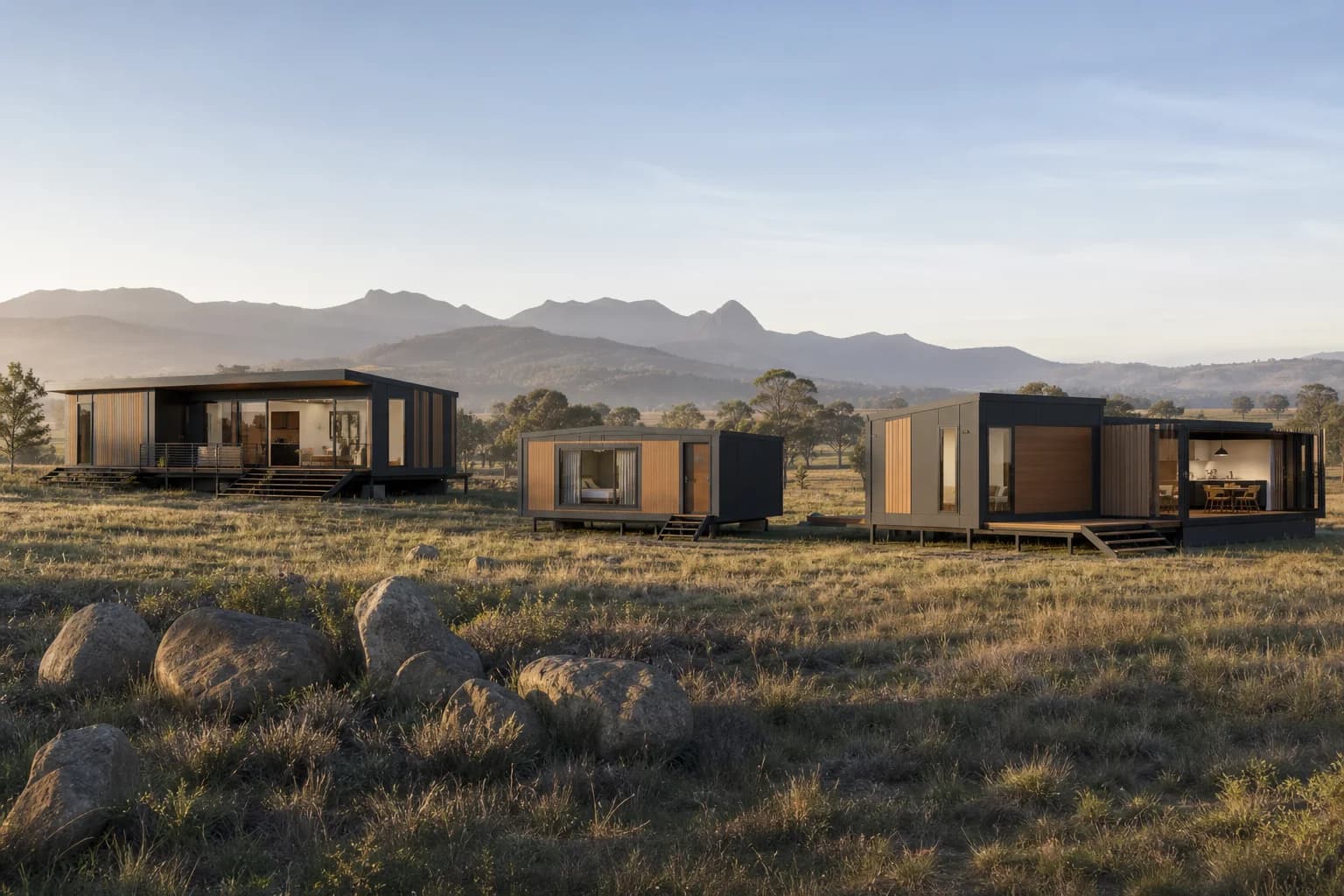
Three homes can look almost identical on the outside and be completely different things in the eyes of a bank, a council and a future buyer. Permanent, relocatable and expandable modular homes each solve a different problem — and choosing the wrong one for your plans is an expensive mistake to unwind. This guide explains what genuinely separates them, how each is treated for approval, finance and resale, and how to work out which one actually fits what you're trying to do.
The short version
If you want the quick answer before the detail:
| Permanent | Relocatable | Expandable | |
|---|---|---|---|
| Best for | A forever home on land you own | Flexibility to move the home later | Building in stages over time |
| Fixed to foundations | Yes | Installed to allow relocation | Yes (once placed) |
| Approval | Standard dwelling | Depends on classification | Standard, per stage |
| Finance | Standard home loan | Can be more limited | Standard, per stage |
| Resale value | Like a conventional house | Less predictable | Like a conventional house |
| Move it later? | No (very costly) | Yes, by design | No |
Now the detail that actually matters.
Permanent modular homes
A permanent modular home is a complete dwelling built in a factory and fixed to engineered foundations on your land. Once it's set, it is legally and structurally identical to a site-built house — the same Class 1a classification under the National Construction Code, the same council approval process, and the same treatment by banks and valuers.
Choose permanent when:
- 01The land is yours and this is a long-term or forever home
- 02You want a bankable asset that holds value like any other house
- 03You're building a primary residence, or a secondary dwelling to keep
What defines it:
The key word is permanent. It's fixed, it's certified, and it behaves like a conventional home in every way that matters financially. You finance it with a standard home loan, it appreciates with the market, and a future buyer treats it as real property. The trade-off is that it isn't going anywhere — moving a foundation-fixed home is possible but rarely worth the cost.
For most people building on land they own for the long term, permanent is the default — and the safest choice for value.
Relocatable homes
A relocatable home is a complete dwelling designed and installed so it can be moved to a different site later. Rather than being permanently fixed, its footings and services are set up for disconnection and transport.
Choose relocatable when:
- 01You have access to land but don't own it outright, or its long-term use is uncertain
- 02You're living on-site during a staged development
- 03You want the option to take your home with you if circumstances change
What defines it:
Flexibility. A relocatable home is a real, quality home — not a temporary structure — but its defining feature is that it can move again. That flexibility comes with a genuine trade-off you need to understand before committing.
Because a relocatable home may not be classified as fixed real property in the same way as a permanent home, it can behave differently for finance and resale. A permanently installed home financed like a house appreciates like a house. A genuinely movable dwelling can have more limited finance options and less predictable resale value — closer to a depreciating asset than an appreciating one.
Whether that matters depends entirely on your plans. If flexibility is the point, it's a feature, not a flaw. If long-term value is the priority, permanent is usually the better fit.
Expandable homes
An expandable home starts as a compact, fully liveable core and grows over time — you add modules, wings or decks in stages as your budget, family or needs evolve. Each stage is a separate build.
Choose expandable when:
- 01You own land but want to avoid the full upfront cost of a complete home
- 02You're not yet certain how much space you'll need long-term
- 03You want to move in quickly with a functional core and expand later
What defines it:
Staging. Stage 1 delivers a self-contained, liveable home — typically bedroom, bathroom, kitchen and living in the 40–60m² range — approved and certified on completion. Later stages add connected modules under a separate approval, with the structural connections engineered into the original design.
An expandable home is permanent once placed — it holds value like any permanent home. The difference isn't in what it becomes; it's in how you pay for it and build it: across multiple budgets and timelines rather than one. It's the answer for people who want a permanent home but not the full cost of it on day one.
The three questions that decide it
Forget the labels for a moment. Your answer to these three questions points to the right home.
1. Do you own the land, and is this long-term?
- 01Yes to both → Permanent (or Expandable if you want to stage the cost)
- 02Not yet, or uncertain → Relocatable keeps your options open
2. Does long-term resale value matter to you?
- 01Yes, it's important → Permanent or Expandable — both behave like conventional homes
- 02Flexibility matters more than resale → Relocatable
3. Can you fund the whole home now, or do you want to stage it?
- 01Whole home now → Permanent
- 02Stage it over time → Expandable
- 03Want to move it later, not stage it → Relocatable
Most people find that two of the three questions point clearly in one direction. Where they conflict — you want both flexibility and resale value, for instance — that's exactly the kind of trade-off worth talking through before you commit.
A common mistake to avoid
The most expensive mistake is choosing a relocatable home for its lower upfront cost, when what you actually needed was a permanent home for its resale value and finance access. The saving on day one can cost far more later, when the home doesn't hold value or a lender treats it as a movable asset.
The reverse mistake — building permanent on land you're not sure about — is less common but also real. If there's a genuine chance you'll move, a permanent home fixed to foundations is the hardest and most costly option to unwind.
Match the home to the plan, not the plan to the cheapest home.
Frequently asked questions
What's the difference between a permanent and a relocatable home?
A permanent home is fixed to engineered foundations and is legally identical to a conventional house — standard approval, standard home loan, and resale value that tracks the market. A relocatable home is installed so it can be moved to another site later; it offers flexibility but can have more limited finance options and less predictable resale value, depending on how it's classified.
Do expandable homes hold their value?
Yes. An expandable home is permanent once placed, so it holds value like any conventional home. The difference is in how it's built and paid for — in stages over time — not in what it becomes. Each stage is approved and certified as a permanent structure.
Can you get a home loan for a relocatable home in Australia?
It depends on classification. A relocatable home installed permanently and treated as a fixed dwelling can generally be financed like a standard home. A genuinely movable dwelling may have more limited finance options, sometimes closer to a personal or asset loan than a mortgage. Speaking to a broker experienced with modular and relocatable homes is advisable before committing.
Which type of modular home is best?
There's no single best — it depends on your plans. Permanent suits a long-term home on land you own and prioritises resale value. Relocatable suits flexibility when land ownership or long-term use is uncertain. Expandable suits building a permanent home in stages to spread the cost over time.
Can a permanent modular home be moved later?
It's possible but rarely worthwhile. A permanent home is fixed to foundations and connected to services, so moving it involves significant disconnection, transport and re-installation cost. If there's a real chance you'll want to move the home, a relocatable home designed for that purpose is the better choice from the start.
The bottom line
Permanent, relocatable and expandable homes aren't three versions of the same thing — they're three answers to three different questions about land, money and time. Own the land long-term and want value? Permanent. Need flexibility? Relocatable. Want a permanent home but staged? Expandable. Get that decision right first, and everything else about your project gets simpler.
A ModuHaus Planning Assessment is designed to work through exactly these questions with you — your land, your plans and your budget — before matching you to the right type of home. It's the clearest way to make sure the home fits the plan, not the other way around.
**Start your Planning Assessment →**
This article is general information only and not financial or legal advice. Finance, approval and resale treatment vary by home type, classification, lender and site. Confirm specifics with your lender, council and a registered professional before committing.
Last updated: 16/07/2026.
Sources and further reading
Requirements change and can be applied differently by site and local authority. Check the current official sources and confirm your project with the relevant council, certifier or qualified professional.