
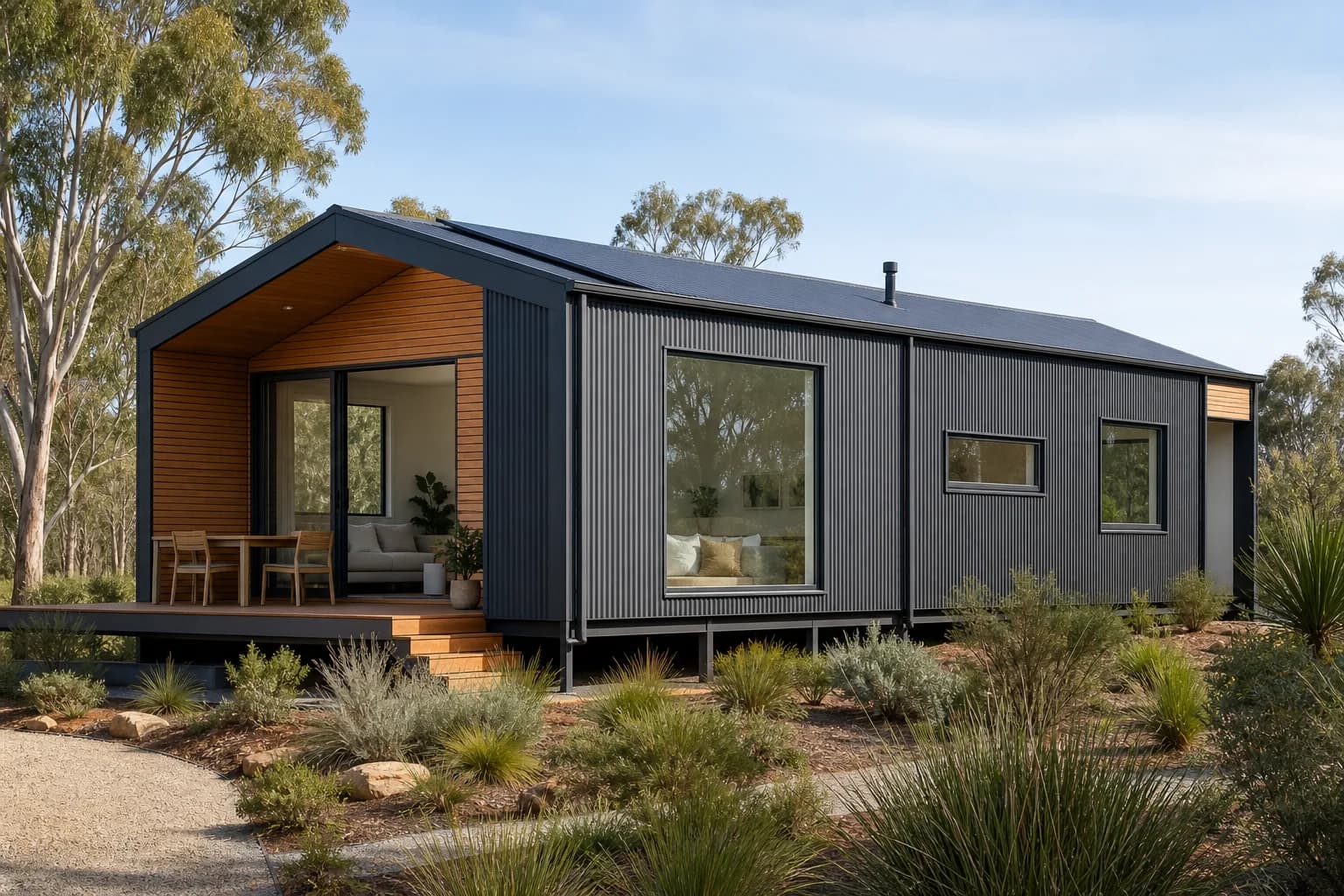
There's a lingering assumption that a home built in a factory must somehow be a lesser home — flimsier, cheaper, a compromise. It's one of the most persistent myths in Australian housing, and it's simply wrong. A permanent modular home is built to exactly the same standards as a conventional house, inspected more thoroughly in some respects, and treated identically by councils, banks and valuers. This article walks through precisely why — the standards, the classification, and the verification behind them — so you can separate the myth from the reality.
The short answer
Yes. A permanent modular home in Australia is built to the same legal and safety standards as a site-built house. Once fixed to its foundations, it's classified as a Class 1a building under the National Construction Code — identical to a conventional home — and must meet every structural, fire, energy and plumbing standard that any new house does.
There is no separate, lower standard for modular construction. The idea that "modular" means "lower quality" confuses a building method with a building standard. They're unrelated. The factory is just where the home is built — not a shortcut around the rules.
What "Class 1a" actually means
This is the single most important thing to understand about modular home quality.
Under the National Construction Code (NCC), buildings are classified by type. Class 1a is the classification for a standard house — a detached dwelling, or one of a row of attached dwellings. Any permanent modular home installed on foundations is classified as Class 1a, exactly like a brick-and-tile home down the street.
That classification isn't a label — it's a legal commitment to a set of standards. To be Class 1a, the home must meet the same requirements for:
- 01Structural integrity
- 02Fire safety
- 03Weatherproofing
- 04Energy efficiency
- 05Health and amenity (ventilation, light, sanitation)
- 06Accessibility (where mandated)
A "manufactured home" on a chassis, or a portable cabin, is a different classification with different rules — which is exactly why it's treated differently by banks and councils. A ModuHaus permanent home is Class 1a. That distinction is the whole ballgame.
The standards a modular home must meet
Here's what "built to Australian standards" concretely means for a permanent modular home.
Structural standards
The home must meet Australian Standards for structural design — timber framing to AS 1684, or the equivalent for steel-framed construction. It must be engineered for the loads of its location, including:
- 01Wind ratings — from standard suburban wind speeds up to N3 or higher for cyclone-prone regions in QLD, WA and NT
- 02Bushfire (BAL) ratings — where the land is bushfire-prone, the home is built to the required Bushfire Attack Level
- 03Soil and footing engineering — foundations designed to the specific soil classification of your site
Energy efficiency
Since 2024, new homes in most states must meet a 7-star NatHERS energy rating, along with Whole-of-Home energy requirements under NCC 2022. A modular home meets these like any other — often more consistently, because factory construction produces tighter, better-sealed building envelopes.
Livable Housing Design
In most states and territories (six of eight as of late 2025), new homes must meet the Livable Housing Design Standard — step-free entry, an accessible toilet on the entry level, reinforced bathroom walls for future grab rails, and wider corridors. Modular homes comply with this the same as any Class 1a build.
Plumbing and electrical
All plumbing and electrical work must be carried out by licensed trades and certified to Australian Standards — no different from a conventional home.
Why factory construction can mean better quality
Here's the part that surprises people. Building in a factory isn't a compromise on quality — in several measurable ways, it's an advantage.
Controlled conditions. A conventional home is built outdoors, exposed to rain, humidity and sun throughout construction. Timber gets wet, materials sit in the weather, and moisture gets sealed into the building. A factory-built home is assembled indoors, in stable, dry conditions, start to finish.
Stage-by-stage inspection. On an open site, an inspector visits at key milestones and sees a snapshot. In a factory, the build moves through controlled stations where each stage is checked as it's completed — often producing more consistent verification of quality, not less.
Precision and consistency. Factory jigs and controlled processes produce tighter tolerances than field construction. Walls are squarer, seals are tighter, and the same quality is repeated on every home rather than depending on which crew showed up that week.
Less material waste and damage. Materials are stored properly, cut precisely, and protected until installed — not left in a paddock exposed to the elements.
The result is a home that's often better sealed, more consistently built, and less exposed to construction-phase moisture damage than an equivalent site build.
How quality is verified
You don't have to take a manufacturer's word for it. A permanent modular home's quality is verified the same way any home's is — through independent certification.
- 01Building approval confirms the design meets the NCC and relevant standards before it's built
- 02Certification by a registered building surveyor or certifier confirms compliance at completion
- 03An occupation certificate is issued before you can move in — the same document required for any new home
- 04Inspections verify structural, plumbing and electrical work to Australian Standards
Because this certification exists, banks lend on permanent modular homes like any house, valuers assess them like any house, and they carry the same legal standing on your title.
One important caveat: imported and uncertified structures
There is a genuine quality risk in the market, and it's worth naming clearly. Some cheap imported "tiny homes," containers or flat-pack kits do not carry Australian certification for building, plumbing and electrical work. These can look like a bargain and then fail approval entirely — because they were never built to Australian Standards in the first place.
This is not a modular problem — it's an uncertified structure problem. The protection is simple: ensure any home is built and certified to Australian Standards, as a Class 1a dwelling where it's to be lived in. A properly certified modular home from a reputable pathway is exactly as safe and compliant as any Australian house. An uncertified import is a different thing wearing similar clothing.
Frequently asked questions
Are modular homes safe to live in?
Yes. A permanent modular home is built to the same safety standards as a conventional house — structural integrity, fire safety, wind and bushfire ratings, and health and amenity requirements under the National Construction Code. Once fixed to foundations it's classified as Class 1a, identical to a site-built home, and certified before occupation.
Are modular homes built to Australian standards?
Yes. Permanent modular homes must comply with the National Construction Code and relevant Australian Standards — the same requirements as any new home. This includes structural design (AS 1684 or steel equivalent), 7-star energy efficiency, bushfire and wind ratings where applicable, and licensed, certified plumbing and electrical work.
Are modular homes lower quality than regular houses?
No. "Modular" is a building method, not a lower standard. Factory construction can produce more consistent quality than site building, because it happens in controlled, dry conditions with stage-by-stage inspection and precise tolerances. A permanent modular home meets identical standards to a conventional house.
Do modular homes meet energy efficiency requirements?
Yes. Permanent modular homes must meet the 7-star NatHERS energy rating and Whole-of-Home requirements under NCC 2022, mandatory in most states since 2024. Factory construction often produces tighter, better-sealed building envelopes, which can improve energy performance.
How do I know a modular home is properly certified?
A permanent modular home goes through building approval before construction and certification by a registered building surveyor at completion, with an occupation certificate issued before you move in — the same process as any new home. Be cautious of cheap imported structures that may lack Australian certification for building, plumbing and electrical work.
The bottom line
The myth is that a factory-built home is a lesser home. The reality is the opposite: a permanent modular home meets the same standards as any Australian house, is verified through the same independent certification, and is often built more consistently thanks to controlled factory conditions. The only genuine quality risk in the category is uncertified imported structures — which is a reason to insist on proper certification, not a reason to doubt modular itself.
Every ModuHaus home is architect-designed and built to Class 1a standards, with the certification that makes it a real, safe, bankable home. If you want to understand exactly how that applies to your project, a Planning Assessment is the place to start.
**Start your Planning Assessment →**
This article is general information only and not legal, structural or building advice. Standards and requirements vary by state and site. Always confirm compliance and certification with a registered building surveyor before proceeding.
Last updated: 16/07/2026.
Sources and further reading
Requirements change and can be applied differently by site and local authority. Check the current official sources and confirm your project with the relevant council, certifier or qualified professional.