
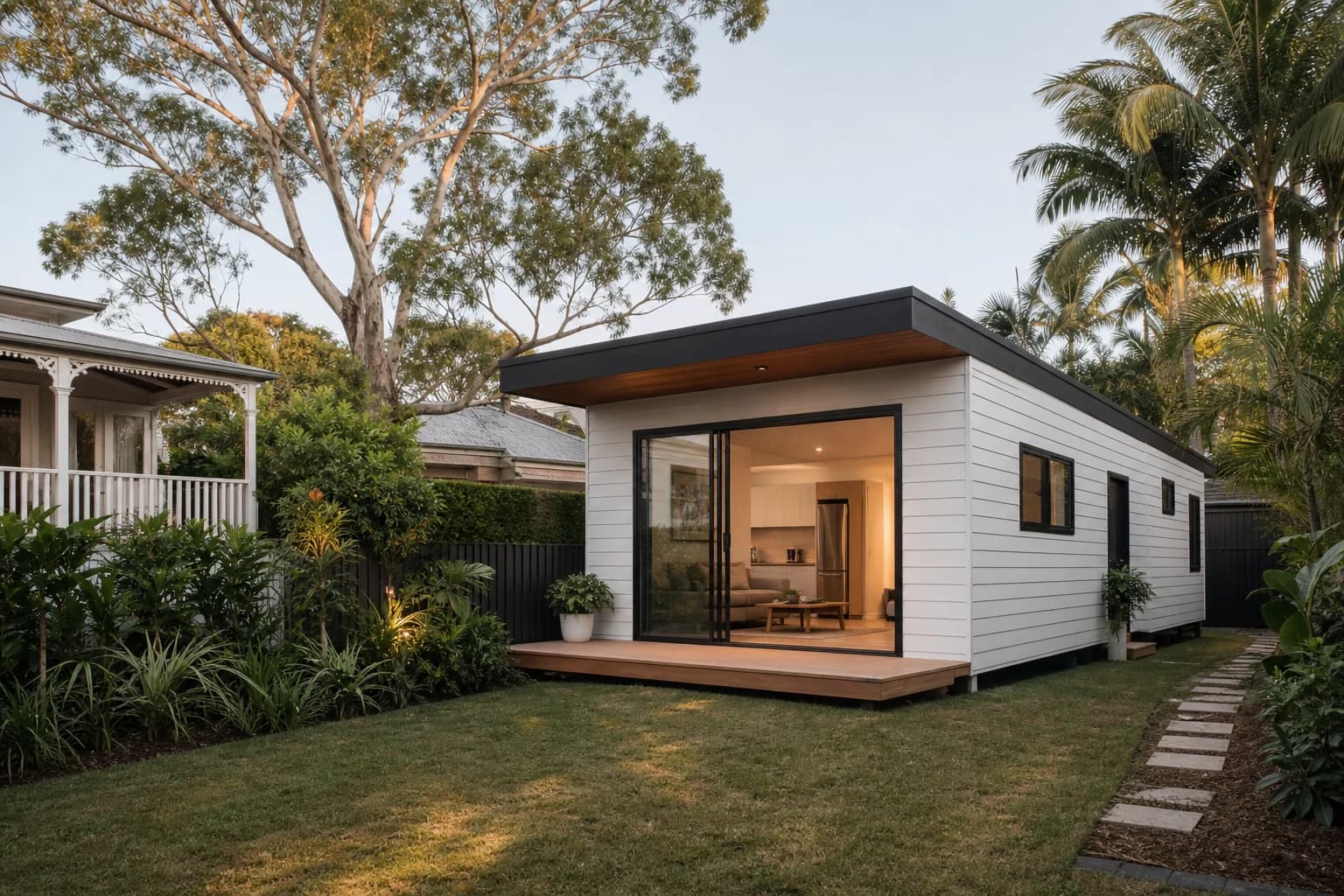
Queensland has some genuinely buyer-friendly rules for modular homes — including one of the earliest "rent to anyone" secondary dwelling reforms in the country. But it also has a cost trap that catches people out: infrastructure charges that can add tens of thousands of dollars if your dwelling is classified the wrong way. This guide explains how Queensland's approval system works, when you can skip a full planning application, and the size threshold that keeps your project on the right side of those charges.
Do modular homes need council approval in Queensland?
Yes. A permanent modular home fixed to the ground in Queensland is classified as a dwelling under the Building Act 1975 and the Planning Act 2016, and must go through the relevant approval process. But Queensland's system distinguishes clearly between types of dwelling, and that classification decides how straightforward — and how expensive — your approval is.
The key document is your council's planning scheme, which sits under the state Planning Regulation 2017. Queensland classifies dwellings as dwelling houses, secondary dwellings, and multiple dwellings (dual occupancy), and the rules — and costs — differ significantly between them.
The secondary dwelling pathway
For most people adding a modular home to an existing property — a granny flat, in everyday language — the relevant category is the secondary dwelling. This is where Queensland can be fast and affordable.
A secondary dwelling is a self-contained dwelling that is subordinate to, and smaller than, the primary dwelling on the same lot. When it meets the requirements, it's often classified as Accepted Development — meaning no council planning approval is required, though building and plumbing approval always are.
Typical requirements for the secondary dwelling pathway:
- 01The dwelling is self-contained and smaller than the main house
- 02It meets your council's size cap (commonly 80m² in many South East Queensland councils)
- 03It meets setback, height and site coverage rules
- 04The land isn't affected by overlays that change the pathway
Meet these, and you generally avoid a planning application. Building approval from a private certifier and plumbing approval are still required — but the slow, discretionary planning stage is removed.
The infrastructure charges trap
This is the part that catches Queensland buyers out, and it's worth understanding before you choose a design.
The classification of your dwelling affects whether infrastructure charges apply:
- 01If it's classified as a Secondary Dwelling, charges may be reduced or waived
- 02If it's classified as a Dual Occupancy (two separate dwellings), infrastructure charges of roughly $15,000 to $30,000 typically apply in South East Queensland
The trigger between the two is often size. Exceed your council's secondary dwelling threshold — commonly 80m² — and the dwelling can be reclassified as a dual occupancy, bringing those charges with it. A design a few square metres too large can cost you tens of thousands in charges alone.
This is why, in Queensland more than most states, the size of your modular home is a financial decision, not just a spatial one.
Secondary dwelling size limits by council
Size caps are set by each council's planning scheme, so they vary. As a guide for South East Queensland:
| Council | Secondary dwelling size guide |
|---|---|
| Brisbane City | 80m² (or the size of the primary dwelling, whichever is less) |
| Gold Coast | 80m² |
| Sunshine Coast | 80m² |
| Logan City | Check current planning scheme |
| Moreton Bay | Check current planning scheme |
| Noosa | Faster, simpler pathways under the Noosa Plan |
Always confirm the current figure for your specific council — these are set locally and can change.
The "rent to anyone" advantage
Queensland was ahead of most states here. Since 2022, secondary dwellings in Queensland can generally be rented to anyone — not just family members. This makes a modular granny flat a genuine income-producing option: a second dwelling on a single block, rentable to unrelated tenants, without subdivision.
For investors and homeowners looking to add rental income, this is one of the more compelling secondary dwelling positions in the country — provided you stay within the size threshold that keeps infrastructure charges down.
When the fast pathway doesn't apply
Accepted Development for a secondary dwelling generally doesn't apply when:
- 01The land is affected by overlays — flood, bushfire, heritage or vegetation
- 02The lot is in a rural zone — rural land is generally not suited to secondary dwellings under most schemes
- 03You're placing multiple dwellings on one lot (classified differently)
- 04The lot falls within a Regional Landscape and Rural Production Area under the South East Queensland Regional Plan (ShapingSEQ)
In these cases, a development application to council is usually required, adding time and assessment.
Tiny homes on wheels in Queensland
Queensland treats tiny homes on wheels (THOWs) fairly flexibly at the local level. A THOW on wheels is generally a caravan, not a building, so it doesn't need building approval — but long-term occupation on private land usually isn't permitted state-wide without approval, and rules vary by council. Some councils, such as Gympie and Lockyer Valley, have specific tiny home guidance or temporary home permit pathways. This is distinct from a permanent modular home, which ModuHaus focuses on.
Site checks before you buy
- Step 01Confirm your council's secondary dwelling size cap — commonly 80m² in SEQ, but check yours.
- Step 02Keep the design within that cap to stay classified as a secondary dwelling and avoid dual-occupancy infrastructure charges.
- Step 03Check your zone — rural zones generally don't support secondary dwellings.
- Step 04Check for overlays — flood, bushfire, vegetation and heritage overlays change the pathway.
- Step 05Confirm plumbing and building approval requirements — these always apply, even under Accepted Development.
- Step 06Factor in infrastructure charges if there's any chance of a dual-occupancy classification.
Frequently asked questions
Do modular homes need council approval in Queensland?
Yes. A permanent modular home is classified as a dwelling and must go through approval. However, a secondary dwelling (granny flat) that meets your council's size and siting requirements — commonly up to 80m² in South East Queensland — is often classified as Accepted Development, meaning no council planning approval is required. Building and plumbing approval are always required.
How big can a granny flat be in Queensland?
Secondary dwelling size caps are set by each council. In many South East Queensland councils, including Brisbane, Gold Coast and Sunshine Coast, the cap is commonly 80m². Staying within this threshold is important — exceeding it can reclassify the dwelling as a dual occupancy, which brings infrastructure charges. Confirm the current figure for your specific council.
What are infrastructure charges on a modular home in Queensland?
Infrastructure charges are fees that can apply depending on how your dwelling is classified. A secondary dwelling may have reduced or waived charges, while a dual occupancy typically attracts charges of roughly $15,000 to $30,000 in South East Queensland. The trigger is often size — exceeding the secondary dwelling threshold can reclassify the dwelling and bring these charges.
Can I rent out a granny flat in Queensland?
Yes. Since 2022, secondary dwellings in Queensland can generally be rented to anyone, not just family members. This makes a modular secondary dwelling a genuine income-producing option — a second, rentable dwelling on a single block without subdivision — provided it stays within the size threshold that keeps infrastructure charges down.
Can I put a modular home on rural land in Queensland?
It's more complex. Rural zones generally don't support secondary dwellings under most council planning schemes, and land in a Regional Landscape and Rural Production Area under ShapingSEQ has additional restrictions. A dwelling house on rural land follows a different pathway. Confirm your zone and the applicable scheme before you buy.
The bottom line
Queensland can be one of the more affordable and flexible states for a modular secondary dwelling — with an early "rent to anyone" reform and an Accepted Development pathway that skips the planning application. But the size threshold is a financial line, not just a spatial one: cross it, and dual-occupancy infrastructure charges of $15,000 to $30,000 can follow. Confirm your council's cap, keep the design within it, and check your zone and overlays before you commit.
A ModuHaus Planning Assessment starts with your Queensland site — its zone, council scheme and the classification that keeps your costs down — then matches a home to it. If you're weighing a modular home in Queensland, that's the most useful first step you can take.
**Start your Planning Assessment →**
This article is general information only and not legal or planning advice. Queensland planning schemes are set by each council and change over time. Always confirm current requirements with your local council or a registered building certifier before proceeding.
Last updated: 16/07/2026.
Sources and further reading
Requirements change and can be applied differently by site and local authority. Check the current official sources and confirm your project with the relevant council, certifier or qualified professional.