
Costs & finance

Modular Home Costs in Australia: What an Indicative Starting Price Excludes

An indicative starting price is not a total-project quote. Site works, delivery, installation, services, approvals and upgrades depend on the specific project.

Reading time
8 min read
Author
Author: ModuHaus Editorial Team
Last updated
Last updated: 16 July 2026
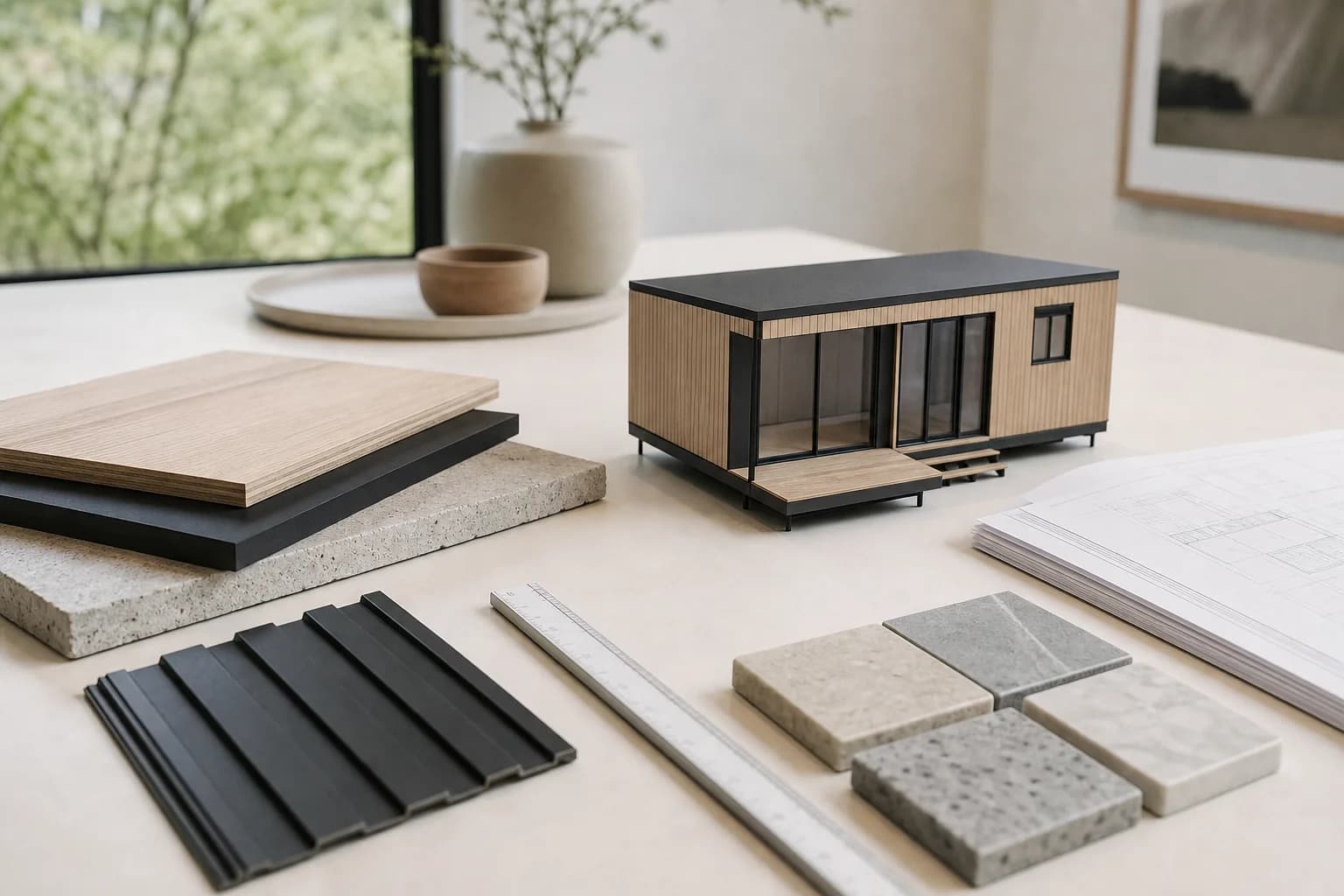
Architectural plans, material samples and a modular home project model on a worktable

You've seen the headline number. "Modular homes from $99,500." It's a real price — but it's the price of the home, not the price of the project. The gap between those two figures is where most budget surprises live, and it's rarely explained upfront. This guide breaks down exactly what an indicative starting price includes, what it doesn't, and how to build a realistic total budget before you fall for a number that was never the whole story.

What "from $99,500" actually means

An indicative starting price is the cost of manufacturing the modular home itself — the building, built in a factory, to a base specification. It's a genuine, useful number for comparing homes. But it's a product price, not a project price.

Think of it like the sticker price on a car versus the drive-away cost. The sticker is real. It's just not what you pay to actually drive off the lot. A modular home's starting price is the same: it tells you what the home costs, not what it costs to have a finished, connected, approved home standing on your land.

The starting price typically includes the factory-built structure to base specification. It typically excludes everything that happens between the factory and you living in it.

What a starting price usually excludes

Here's where the real budget lives. None of these are hidden fees — they're simply separate from the home itself, because they depend entirely on your site.

Cost componentTypical rangeWhy it varies
Site preparation & foundations$10,000 – $40,000+Flat cleared block vs sloping or difficult site
Utility connections$5,000 – $25,000+Distance to existing water, sewer and power
Council approval & certification$7,000 – $15,000CDC vs DA pathway, council fees
Delivery & craning$3,000 – $15,000+Distance from factory, site access, crane needs
Landscaping & driveway$5,000 – $20,000+Scope and existing site conditions
Upgrades from base specVaries widelyFinishes, appliances, additional features

Let's look at the ones that catch people out most.

Site preparation and foundations

Your block has to be ready before the home arrives — cleared, levelled, and fitted with the right footings. A flat, cleared suburban block is cheap to prepare. A sloping block, a bushfire-prone site, or land that needs significant earthworks can add tens of thousands.

This is the single most variable cost in a modular project, and the reason two identical homes can have very different total budgets. The home is fixed; the ground it sits on isn't.

Utility connections

Getting water, power and wastewater to the home is a separate cost from the home. On a serviced suburban block, connections are relatively straightforward. On rural or off-grid land, this can become one of the largest line items — running power a long distance, drilling a bore, or installing an on-site wastewater system.

Council approval and certification

Approval fees, certifier fees and required reports are their own cost. As a rough guide, the faster CDC pathway in NSW is generally cheaper than a full Development Application. (For the detail on approval pathways, see our state guides for NSW and Victoria.)

Delivery and craning

The home has to physically get to your site and be placed. Distance from the factory, site access, and whether a crane is needed all affect this. A tight or remote site costs more to deliver to. (Our delivery access checklist covers what drives this cost.)

A realistic total budget

Put it together, and a modular home project in Australia usually looks more like this:

Low endHigher end
Modular home (structure)$99,500$350,000
Site prep & foundations$10,000$40,000
Utility connections$5,000$25,000
Approval & certification$7,000$15,000
Delivery & craning$3,000$15,000
Landscaping & driveway$5,000$20,000
Realistic project total~$130,000~$465,000+

The point isn't that modular homes are expensive — they're often 10–20% cheaper than an equivalent site-built home, and far faster to build. The point is that the starting price and the project cost are two different numbers, and budgeting off the first one is how people get caught out.

Where modular genuinely saves money

None of this means the value isn't real. Modular homes win on cost in ways a starting price doesn't even capture:

  • Build speed — 12 to 20 weeks in the factory versus 12 to 18 months for a site build. Shorter timelines mean lower holding costs and less interest on a construction loan.
  • Price certainty — factory homes are fixed-price at contract. Site builds routinely blow out on weather, trades and material costs.
  • No weather delays — factory construction doesn't stop for rain.
  • Lower labour costs in remote areas — no need for expensive fly-in trades on rural and regional sites.

The saving is real. It's just measured against the total project cost of the alternative — not against a starting price.

How to budget properly

  1. 1. Start with the total, not the starting price. Treat the headline number as the first line item, not the budget.
  2. 2. Get a site-specific quote. Your site — its slope, services, access and approval pathway — drives most of the excluded costs. Only a site-specific assessment gives you a real number.
  3. 3. Budget the excluded categories deliberately. Site prep, utilities, approval, delivery and landscaping each need their own line.
  4. 4. Confirm your approval pathway. CDC vs DA, or planning-permit-required vs not, materially changes both cost and timeline.
  5. 5. Resolve services early. On rural land, water and wastewater are often the biggest swing factor — get clarity before you commit.
  6. 6. Add a contingency. Even with good planning, a 5–10% buffer on the excluded costs is sensible.

Frequently asked questions

How much does a modular home cost in Australia?

The modular home structure itself typically costs between $99,500 and $350,000 depending on size and specification. The realistic total project cost — including site preparation, foundations, utility connections, council approval, delivery and landscaping — usually falls between roughly $130,000 and $465,000 or more. The starting price is the home only; the project total depends heavily on your site.

What does a modular home starting price include?

An indicative starting price generally includes the factory-built modular home to a base specification — the structure itself. It usually excludes site preparation, foundations, utility connections, council approval and certification, delivery and craning, landscaping, and any upgrades from the base specification. These are separate because they depend on your specific site.

Are modular homes cheaper than building a house in Australia?

Generally yes — a modular home is often 10–20% cheaper than an equivalent site-built home for like-for-like specifications, and significantly faster to build. However, the total cost depends on your site. The savings come from factory efficiency, price certainty, no weather delays and shorter timelines, not from lower quality.

Why is the total cost so much more than the advertised price?

Because the advertised price is for the home, not the project. Everything between the factory and a finished, connected, approved home on your land — site works, foundations, utilities, approvals, delivery — is separate and site-dependent. None of it is hidden; it simply can't be priced accurately until your specific site is assessed.

What's the most variable cost in a modular home project?

Site preparation and foundations, followed by utility connections. A flat, serviced suburban block is inexpensive to prepare and connect. A sloping, rural or off-grid site can add tens of thousands for earthworks, footings and running services. This is why two identical homes can have very different project totals.

The bottom line

The starting price is real, but it's the beginning of the budget, not the end of it. Site preparation, utilities, approval, delivery and landscaping are the costs that turn a home into a finished project — and they're driven by your land, not the home you choose. Budget from the total, get a site-specific quote, and the number stops being a surprise.

A ModuHaus Planning Assessment is built to give you that clarity early — starting with your site, your approval pathway and your services, so the total cost is something you understand before you commit, not after.

Start your Planning Assessment →

This article is general information only. All figures are indicative ranges and vary significantly by site, region, specification and supplier. A site-specific quote is the only accurate way to budget a modular home project.

Last updated: 16/07/2026.

Sources and further reading

Requirements change and can be applied differently by site and local authority. Check the current official sources and confirm your project with the relevant council, certifier or qualified professional.

Planning Assessment

Start with your site, not only the design.

Share the practical details around your land, intended use and timing so ModuHaus can help clarify the next conversation.

This guide is general information only and is not legal, planning, building, certification or financial advice. NSW requirements can change and may apply differently to each site. Confirm requirements with your local council, a registered certifier or another qualified professional before proceeding.

Not Sure? Start Assessment