
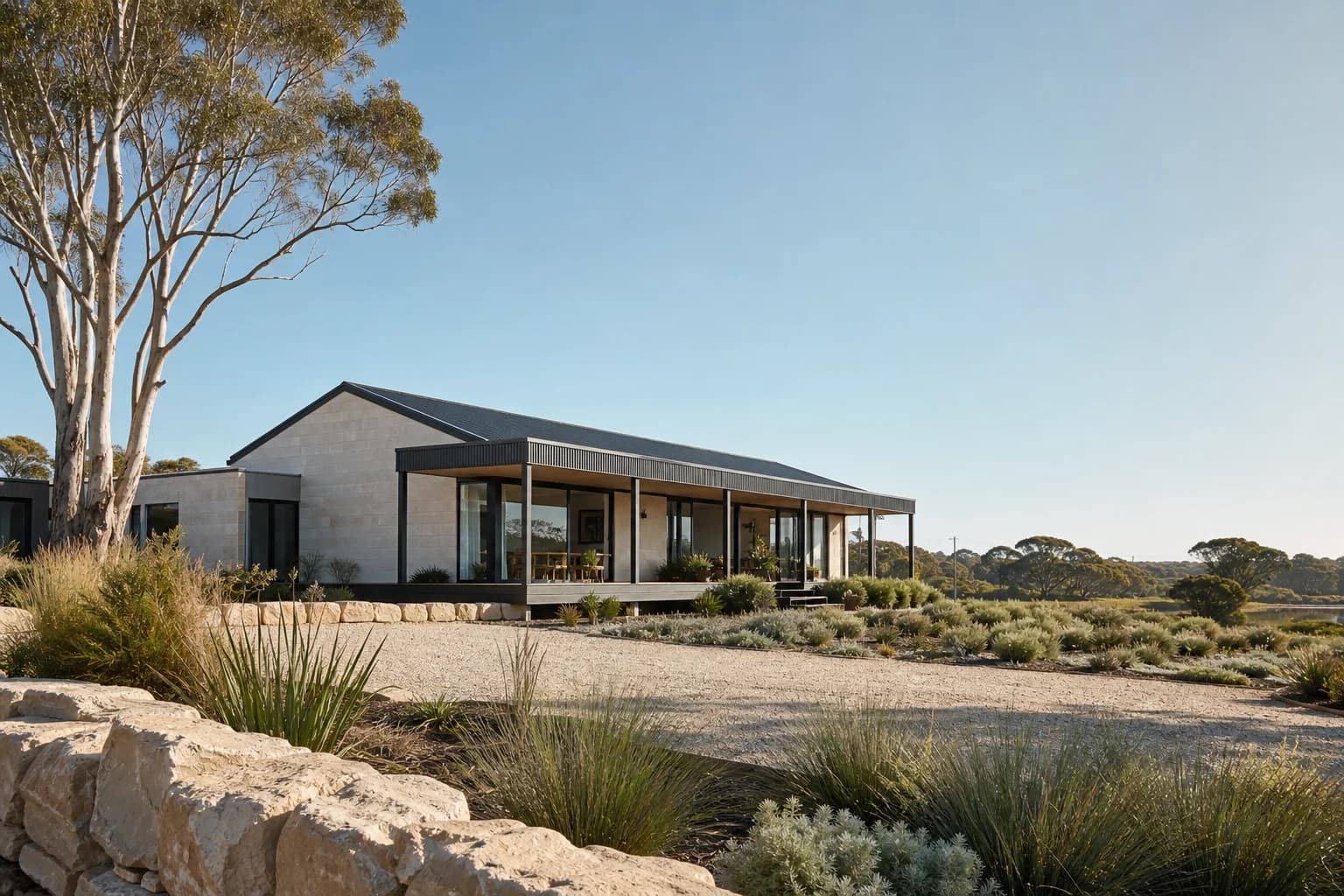
Western Australia asks for a bit more paperwork than the eastern states — two separate approvals rather than one streamlined pathway — but it also made one of the most significant tiny-home reforms in the country in 2024. If you're weighing a modular home in WA, understanding the two-approval system, the R-Code rules, and the recent changes to how long you can live in a movable dwelling is the difference between a smooth project and a frustrating one. This guide walks through all of it.
Do modular homes need council approval in WA?
Yes — and WA is distinctive in requiring two separate approvals for a fixed modular home, assessed against different things.
- 01Planning approval (Development Application) — covers zoning, R-Code compliance, bushfire risk and local planning controls. Submitted to your local council.
- 02Building permit — covers structural integrity, safety, plumbing and energy efficiency under the National Construction Code. Issued by a private building surveyor.
Both are generally required for a habitable modular home in WA. This two-step system is more involved than the single streamlined pathways in Victoria or NSW, but each approval covers a distinct part of the project, and they can progress in parallel.
Planning approval: the details
Planning approval is assessed by your local council against the Planning and Development Act 2005 and the Residential Design Codes (R-Codes), which govern density, setbacks, and site requirements.
- 01Timeline: typically 2 to 4 months
- 02Covers: zoning compliance, R-Code standards, bushfire (BAL) assessment where relevant, and local planning policy
- 03A useful protection for applicants: if a council doesn't determine an application within around 9 weeks, residents can appeal to the relevant Minister
The R-Codes are central in WA. They set the rules for what can be built on residential land — including setbacks and size requirements for ancillary dwellings — so your R-Code zone is one of the first things to check.
Building permit: the details
Separately, a building permit confirms the home meets construction and safety standards. It's issued by a private building surveyor, who certifies the building permit application.
- 01Required for all habitable dwellings, regardless of the planning outcome
- 02Covers structural integrity, plumbing, electrical and NCC energy efficiency
- 03The surveyor's certification is a required part of the application
Ancillary dwellings (granny flats) in WA
In WA, a granny flat is generally called an ancillary dwelling — a self-contained dwelling on the same lot as a primary home. This is the common pathway for a modular home added to an existing property.
- 01Placed on a residential lot with an existing primary dwelling
- 02Must meet R-Code setback and size requirements
- 03Both planning and building approvals are typically required
- 04Where the owner lives on-site and offers short-term rental, planning approval is often not required in many WA councils
Ancillary dwellings are a well-established pathway in WA, but the R-Code requirements mean the size and siting rules are worth confirming for your specific zone before choosing a design.
The 2024 tiny home reform — a major change
This is the standout development in WA, and it's worth knowing even if you're building a permanent home, because it reflects how the state is thinking about smaller and movable dwellings.
In September 2024, WA updated the Caravan Parks and Camping Grounds Regulations 1997 so that local councils can now approve tiny homes on wheels (THOWs) to stay on private land for up to 24 months — two years — with the option to renew. This is one of the most generous movable-dwelling positions in the country.
To obtain the 24-month approval, you generally need to demonstrate a safe and hygienic wastewater management plan:
- 01Blackwater (toilet waste): connected to street sewer, or an approved on-site system (septic or treatment unit)
- 02Greywater: an approved disposal method
Short stays on private land can often occur without any council approval process, with the 24-month pathway applying to longer-term arrangements.
It's worth being clear: this reform is about movable dwellings on wheels, not permanent modular homes. A permanent modular home fixed to foundations follows the standard two-approval pathway above. But the reform signals a state increasingly open to smaller-footprint living — relevant context if you're comparing permanent and movable options.
The Shire of Esperance: a simpler pathway
Worth a specific mention: the Shire of Esperance has a local planning policy specific to tiny houses, under which only planning approval is required — no building permit — making it one of the simplest tiny-house approval processes in Australia. It's a useful example of how much local policy can vary within WA, and a reminder to always check your specific shire's position.
Site checks before you buy
- Step 01Confirm your R-Code zone — it governs setbacks, density and ancillary dwelling rules.
- Step 02Confirm whether you need planning approval, a building permit, or both — for a fixed home, expect both.
- Step 03Check for bushfire (BAL) requirements — common across much of WA and assessed in planning.
- Step 04For an ancillary dwelling, confirm R-Code size and setback limits for your zone.
- Step 05If considering a movable dwelling, check your council's position on the 24-month pathway and wastewater requirements.
- Step 06Engage a private building surveyor early — you'll need one for the building permit regardless.
Frequently asked questions
Do modular homes need council approval in Western Australia?
Yes. WA requires two separate approvals for a fixed modular home: planning approval (a Development Application assessed by council against zoning and the R-Codes) and a building permit (issued by a private building surveyor, covering structure, safety and energy efficiency). Both are generally required for a habitable home, and they can progress in parallel.
How long does planning approval take in WA?
Planning approval in WA typically takes 2 to 4 months, depending on the council and site. A useful protection exists for applicants: if a council doesn't determine an application within around 9 weeks, residents can appeal to the relevant Minister. A separate building permit, issued by a private building surveyor, is also required.
What is an ancillary dwelling in WA?
An ancillary dwelling is WA's term for a granny flat — a self-contained dwelling on the same lot as a primary home. It must meet Residential Design Code (R-Code) setback and size requirements, and generally requires both planning and building approval. Where the owner lives on-site and offers short-term rental, planning approval is often not required in many WA councils.
Can you live in a tiny home on wheels in WA?
Since September 2024, WA councils can approve tiny homes on wheels to stay on private land for up to 24 months, with the option to renew — one of the most generous movable-dwelling positions in Australia. Approval generally requires a safe wastewater management plan for blackwater and greywater. Short stays can often occur without a formal approval process. This applies to movable dwellings, not permanent modular homes.
Are the rules the same across all WA councils?
No. While the two-approval framework is state-wide, local policies vary significantly. The Shire of Esperance, for example, has a tiny house policy requiring only planning approval and no building permit. Always confirm the position for your specific shire or council before committing to a design or purchase.
The bottom line
Western Australia asks for two approvals rather than one, and the R-Codes sit at the centre of what you can build. It's a little more paperwork than the eastern states — but the pathways are well established, and the 2024 tiny-home reform makes WA one of the more forward-thinking states for smaller-footprint living. The keys are confirming your R-Code zone, understanding you'll likely need both planning approval and a building permit, and checking your specific council's position, since local policy varies more in WA than almost anywhere.
A ModuHaus Planning Assessment starts with your WA site — its R-Code zone, the approvals it needs, and the pathway ahead — then matches a home to it. If you're considering a modular home in Western Australia, that's the most useful first step you can take.
**Start your Planning Assessment →**
This article is general information only and not legal or planning advice. WA planning and building regulations change and are applied differently by each local council. Always confirm current requirements with your local council, a registered building surveyor or a qualified planning professional before proceeding.
Last updated: 16/07/2026.
Sources and further reading
Requirements change and can be applied differently by site and local authority. Check the current official sources and confirm your project with the relevant council, certifier or qualified professional.