
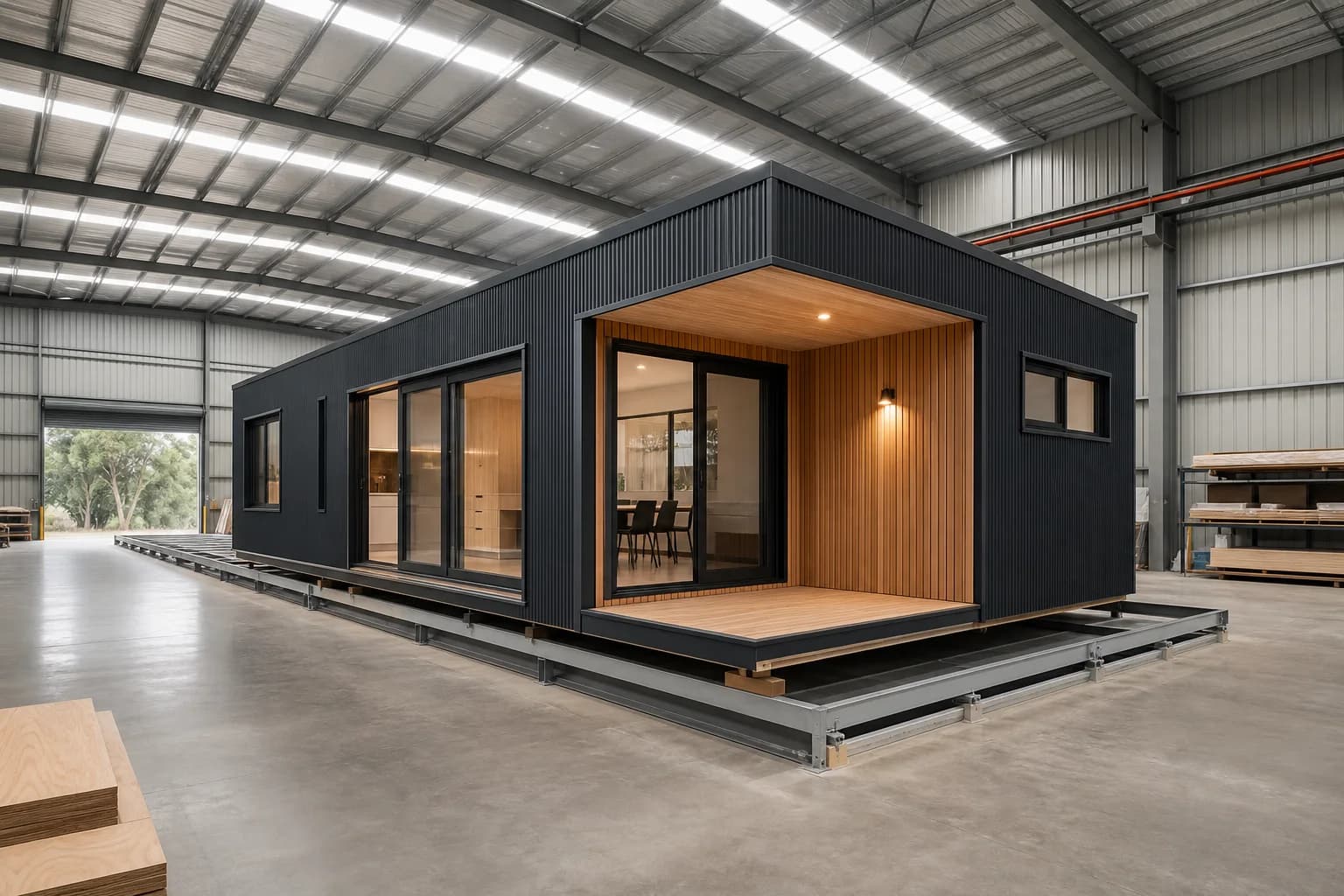
A factory lead time is not a complete project programme. The useful answer depends on your design, approval pathway, supplier capacity, funding and site readiness. Ask for a dated schedule from enquiry to lawful occupation, with assumptions attached to each milestone.
There is no verified national duration or ModuHaus delivery promise in this guide.
Read the programme in six stages
| Stage | Evidence needed to plan it | What can change the date |
|---|---|---|
| Brief and design | Site information, intended use and agreed drawings | Missing surveys or design changes |
| Approvals | Required applications and a complete document checklist | Assessment, referrals and requests for information |
| Manufacture | Supplier slot, specification and release conditions | Procurement, capacity, inspections and variations |
| Site preparation | Approved works, foundation design and contractor availability | Ground conditions, access and weather |
| Delivery and installation | Transport route, lifting plan and accepted site readiness | Permits, equipment availability and weather |
| Completion and occupation | Service connections and required inspections/documents | Defects, utility scheduling and outstanding conditions |
Each stage needs an owner and a start condition. A supplier's estimated production duration may start only after design approval, a payment or receipt of documents. Record that trigger rather than counting from your first enquiry.
Approval timing is not a guaranteed move-in date
NSW Planning's complying-development guidance explains the pathway and its requirements. Any published assessment timeframe should not be treated as the time needed to prepare the application, resolve site constraints and finish the home.
Do not assume that every modular proposal qualifies for complying development. Review the NSW guide or Victoria guide with the relevant professional. The applicable approvals and completion documents depend on location and proposal.
Which tasks can overlap?
Factory work and site preparation may overlap when approvals, design and contract arrangements permit. Neither should be started simply to protect a target date if the necessary authorisations or information are missing.
| Possible overlap | Confirm first |
|---|---|
| Design coordination and supplier availability checks | Which drawings and assumptions the supplier is reviewing |
| Manufacture and authorised foundation works | Compatible drawings, approval conditions and site contractor scope |
| Transport planning and site preparation | Final transport dimensions, route and lifting requirements |
Offsite manufacture can reduce exposure to weather for factory activities. It does not remove weather risk from transport, craning or site works, and it does not eliminate procurement or labour constraints.
Ask these questions before accepting a schedule
- Step 01What event starts the quoted lead time?
- Step 02Which dates are estimates and which are contractual commitments?
- Step 03Who provides each approval document, and by when?
- Step 04What must be complete before dispatch is authorised?
- Step 05How are changes, delays and revised dates communicated?
- Step 06What must be signed off before occupation?
Use the delivery access checklist early. Review site preparation alongside the actual foundation and service requirements, not as a substitute for project documentation.
For investment and B2B projects
Separate the expected dispatch date from the expected rental-ready date. Model the cost of a later start rather than assuming immediate rent after delivery. Our rental cash-flow guide explains downside testing.
For multiple dwellings, agree sequencing, storage responsibility and site capacity before reserving factory slots. Use the developer project process to assign decisions and evidence to the appropriate parties.
Frequently asked questions
Can a modular home be ready in twelve weeks?
A quote may refer to a particular production stage, but that does not establish a complete-project duration. Request the start conditions, exclusions and occupation milestones in writing.
Is modular construction always faster?
No universal comparison applies. Compare equivalent project scopes and programmes, including approval preparation, site works, connections and completion.
Can I move in as soon as the home arrives?
Delivery alone does not establish readiness for occupation. Confirm installation, service commissioning, inspections and the required completion documents for your jurisdiction.
Explore Permanent Homes or see How It Works to prepare your project brief.
Sources and further reading
Requirements change and can be applied differently by site and local authority. Check the current official sources and confirm your project with the relevant council, certifier or qualified professional.