
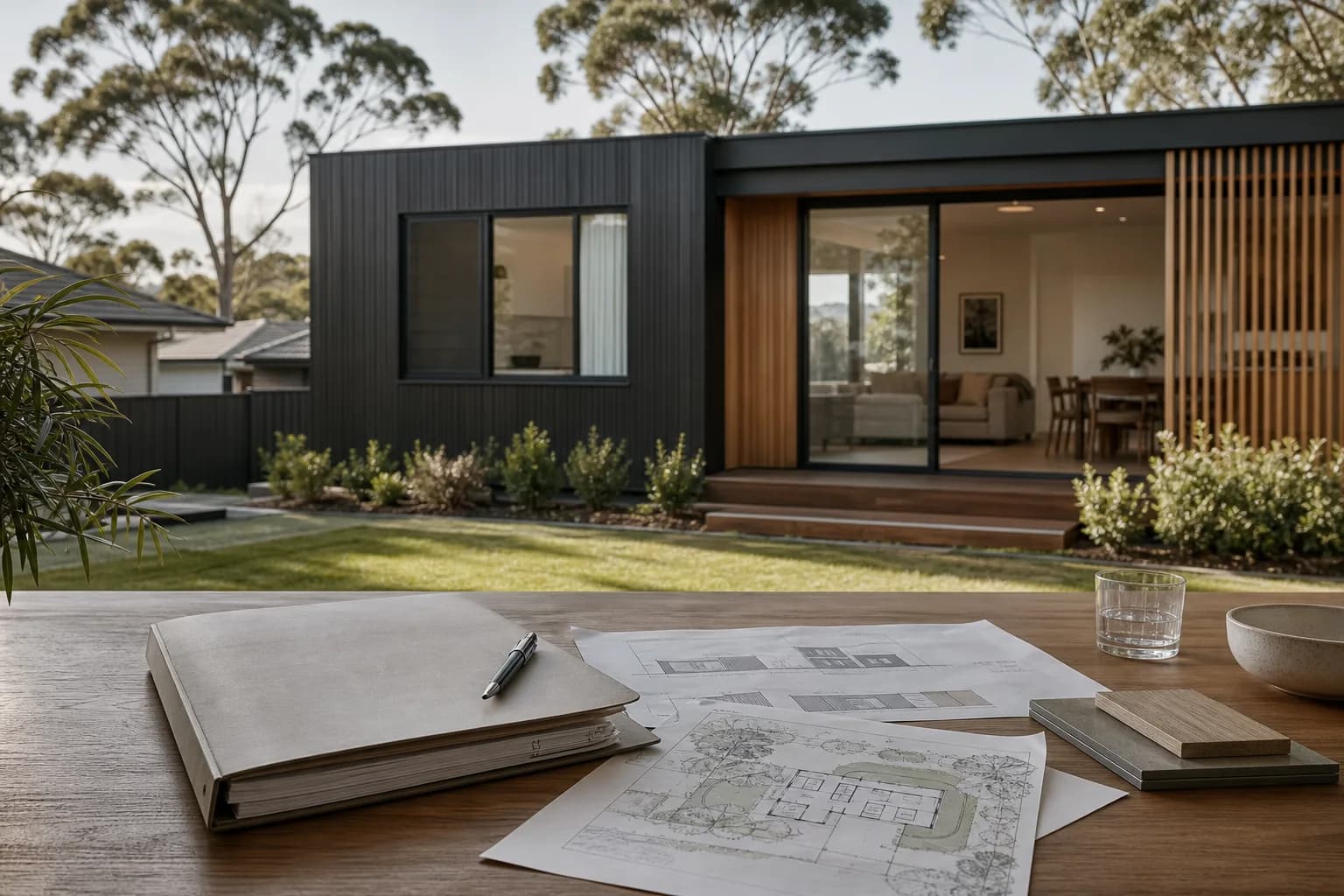
If you are planning a modular home, granny flat or secondary dwelling in NSW, one of the first approval questions is whether the project may proceed through a Complying Development Certificate (CDC) or requires a Development Application (DA).
The two pathways can mean a very different assessment process and project timeline. This guide explains how they differ and what can affect eligibility. It is general information only, not planning advice for a particular property.
What is a Complying Development Certificate?
A CDC is a streamlined approval pathway that combines planning and construction approval in one certificate. A council or registered certifier assesses the proposal against predetermined development standards.
NSW Planning describes complying development as a fast-tracked pathway for straightforward development. A secondary dwelling may qualify where the proposal satisfies the relevant requirements under the current State Environmental Planning Policy (Housing) 2021 and applicable complying-development controls.
Eligibility is site and design specific. Among other requirements, a secondary dwelling generally needs to be on the same lot as the principal dwelling and satisfy the applicable standards for matters such as lot size, setbacks, building height and floor area.
What is a Development Application?
A DA is the standard merit-assessment pathway used when a proposal does not satisfy the fixed criteria for complying development or when a site constraint prevents the CDC pathway from being used.
Council assesses a DA against the planning controls that apply to the land. The process may involve public notification, specialist reports, referrals or requests for further information. Timeframes vary substantially between councils and projects.
When might a DA be required instead of a CDC?
A DA may be required when:
- 01the lot, setbacks, height or floor area do not satisfy the relevant complying-development standards
- 02the land is affected by constraints that exclude or limit complying development
- 03bushfire, flooding, heritage, biodiversity or other overlays require a merit assessment
- 04the proposal is not a qualifying secondary-dwelling arrangement
- 05the intended use or design needs assessment under another planning pathway
Planning instruments and property constraints can be detailed. Confirm the likely pathway with the local council or a registered certifier before committing to a design, manufacturing slot or site plan.
CDC and DA at a glance
| Question | Complying Development Certificate | Development Application |
|---|---|---|
| Assessed by | Council or a registered certifier | Local council |
| Assessment type | Predetermined development standards | Merit assessment against applicable planning controls |
| Timing | Generally faster for an eligible, complete proposal | Varies by council, referrals and project complexity |
| Neighbour notification | Pre-approval and pre-construction notice requirements can apply; confirm the location and proposal | Notification and submissions depend on the applicable process |
| Best suited to | Straightforward proposals that satisfy every relevant standard | Constrained sites or proposals that need a merit assessment |
| BASIX | Required where the development is a BASIX development | Required where the development is a BASIX development |
Why the pathway matters for a modular home
NSW Planning Portal's neighbour-notification guidance distinguishes pre-approval notices from notices before work begins. Notice is not the same as a DA-style submission process. Confirm the required recipients and notice periods with the certifier; do not assume that a CDC means no neighbour notice.
Modular projects often lock in the model, floor plan and manufacturing details earlier than a conventional site-built project. A design that fits the CDC controls on one property may require a DA on another because of the land, overlays or siting.
Check the likely pathway before finalising a model. An early planning review can reduce redesign, approval delays and uncertainty around site works.
Where BASIX fits
BASIX is not an alternative to a CDC or DA. Where BASIX applies, the certificate and commitments form part of the approval documentation. Read our companion guide to modular home BASIX requirements in NSW for the water, energy and thermal-performance checks involved.
How ModuHaus approaches approval questions
ModuHaus is a guidance and sourcing platform, not a council or certifier. We help customers compare modular-home pathways and identify the questions to resolve before supplier and pricing conversations.
Our Council and Approvals guide covers the broader state-by-state picture. The Planning Assessment is a useful starting point for considering which ModuHaus collection may suit the intended use and site.
For NSW-specific site preparation, use the NSW state guide. Then compare Permanent Homes against the confirmed constraints, and carry approval costs into the NSW/VIC budget checklist. How It Works explains the coordination role without replacing the certifier's decision.
Frequently asked questions
Can every modular home use the CDC pathway in NSW?
No. A CDC is only available when the proposed development and the property satisfy every applicable complying-development requirement. A constrained site or a non-standard proposal may require a DA.
Is a CDC always faster than a DA?
A CDC is designed as a streamlined pathway, but the actual timing depends on eligibility, complete documentation and any required reports. A DA generally involves a broader assessment and may take longer, but there is no single timeframe that applies to every project.
Is BASIX required for both pathways?
Where a proposal is a BASIX development, its BASIX certificate and commitments are required as part of the relevant approval documentation. Confirm the current requirements for the specific development with the certifier or council.
Who confirms whether a project needs a CDC or DA?
The local council or a registered certifier can assess the property and proposed design against the current planning controls. Obtain this advice before relying on a particular pathway.
Does ModuHaus lodge CDC or DA applications?
No. ModuHaus provides guidance and product-sourcing support. Approval applications are handled by the relevant council, certifier and appointed project professionals.
Key takeaways
- 01A CDC is a streamlined pathway available only when the site and design meet all applicable standards.
- 02A DA provides a merit-assessment pathway for projects that do not fit the complying-development criteria.
- 03The same modular design can follow a different pathway on a different property.
- 04Check the site and likely approval pathway before finalising the model or manufacturing details.
- 05Confirm current requirements with the local council or a registered certifier.
Sources and further reading
Requirements change and can be applied differently by site and local authority. Check the current official sources and confirm your project with the relevant council, certifier or qualified professional.