
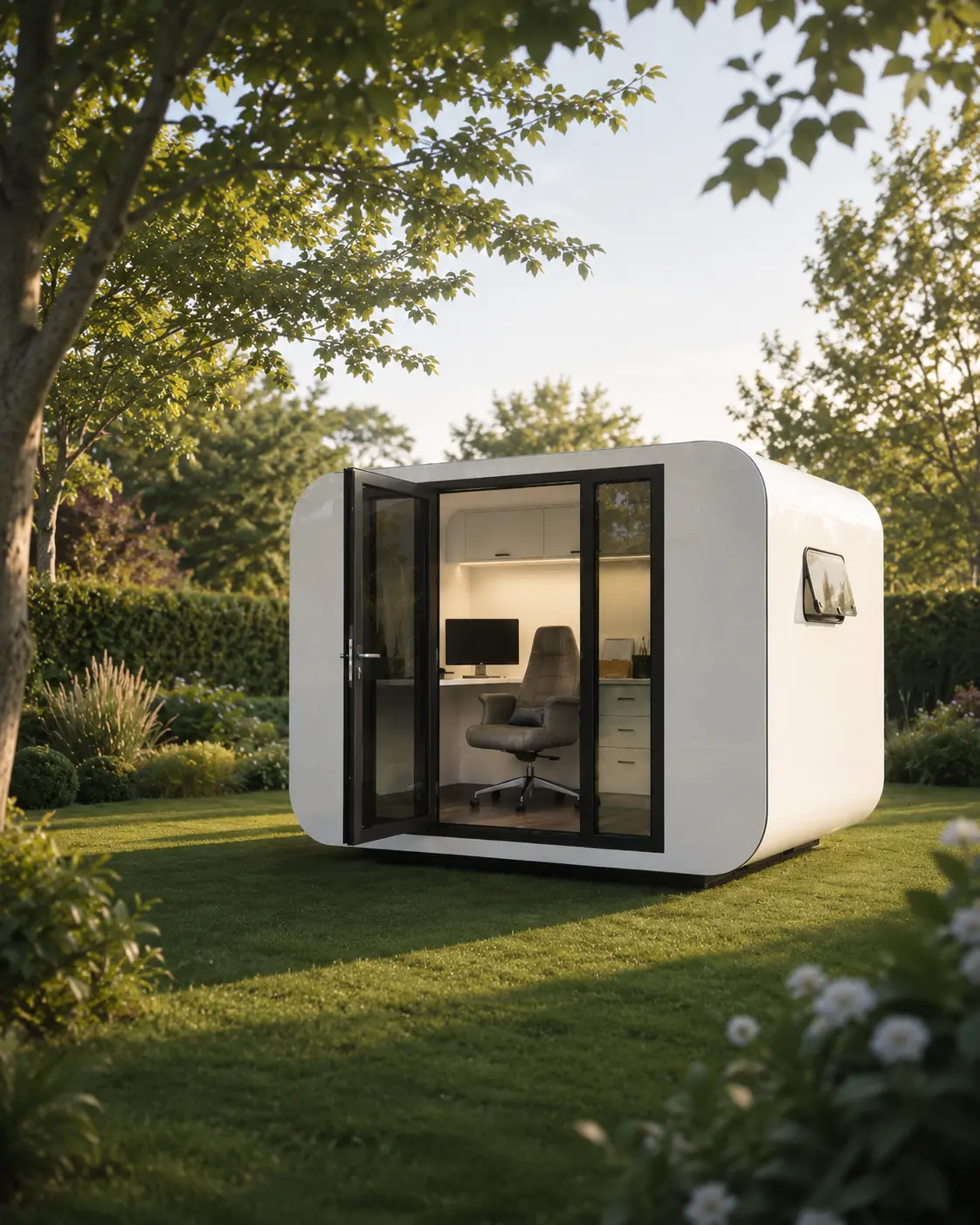
Two structures can look almost identical: same size, cladding and windows. Yet one may be approved as a dwelling and the other may be a non-habitable building. The distinction is their National Construction Code (NCC) classification: Class 1a or Class 10a. It matters when you are comparing a permanent modular home, granny flat, garden studio or office pod. This guide explains what separates the two and what to confirm before you buy.
The short answer
Class 1a is a single dwelling, such as a detached house, town house or row house. Class 10a is a non-habitable building, such as a private shed, garage or carport. According to the National Construction Code, the classification reflects the intended use and the building requirements that apply. A Class 10a building is not a substitute for a dwelling simply because it is fitted out like one.
The two classifications sit in the same volume of the NCC (Volume Two, alongside plumbing requirements in Volume Three), but they could not be more different in what they allow you to do.
Why this comparison matters more than it looks
Here's the trap. A Class 1a home and a Class 10a structure can be visually indistinguishable. Both can have:
- 01The same external cladding and roofline
- 02Windows, decking, even a driveway
- 03A similar footprint and floor plan
- 04Power connected
None of that tells you the classification. What determines whether something is Class 1a or Class 10a is what it's built and certified to — the standards behind the walls, not the walls themselves. This is precisely why backyard "office pods," garden studios and basic cabins are so often marketed in ways that blur the line, whether intentionally or not.
Side-by-side comparison
| Class 1a | Class 10a | |
|---|---|---|
| What it is | A habitable dwelling — a house | A non-habitable structure — shed, garage, carport |
| Can you live in it? | Yes, permanently | No |
| Built to residential standards | Yes (structural, fire, energy, amenity) | No — lower structural-only standard |
| Requires a bathroom/kitchen | Yes, for full habitation | No |
| Approval pathway | Residential dwelling approval | Often simpler/exempt structure approval |
| Can be legally rented as accommodation | Yes | No |
| Finance and valuation | May be assessed as a residential dwelling, subject to lender and valuer criteria | May be assessed differently because it is not a dwelling |
| Insurance and resale | May be considered with the residential property, subject to policy and valuation | May be treated differently from habitable residential space |
| Typical examples | House, granny flat, permanent modular home | Backyard shed, garage, basic cabin, storage structure |
What actually makes the difference
The gap between Class 1a and Class 10a comes down to a handful of specific requirements. A structure only becomes Class 1a when it's built and certified to include:
- 01Habitable-standard structure — engineered for continuous occupation, not just storage or vehicle shelter
- 02Sanitation — a proper bathroom, connected to approved wastewater or sewer
- 03Kitchen or kitchenette facilities — for genuine self-contained living
- 04Ventilation and natural light — meeting residential health and amenity standards
- 05Energy efficiency compliance — the 7-star NatHERS-equivalent thermal standard and Whole-of-Home requirements that apply under NCC 2022, with adoption varying by state
- 06Fire safety measures — smoke alarms and residential fire provisions
- 07Full building certification — signed off as a habitable dwelling, not a storage or utility structure
A Class 10a structure is built to a lower, structural-only standard, because it's not designed for anyone to live in it. Add plumbing, a kitchen, proper insulation and full certification to what starts as a Class 10a-style structure, and you're no longer looking at the same building — you're looking at a Class 1a dwelling, assessed and approved as one.
The "office pod" problem
This is where the distinction causes the most real-world confusion. A backyard studio marketed as an "office pod," "garden room" or "studio retreat" is very often Class 10a — a non-habitable structure. It can be beautifully finished, fully powered, and comfortable to work in during the day. What it typically can't do is:
- 01Be legally used as a bedroom or full-time residence
- 02Be rented out as accommodation
- 03Be valued by a bank as a dwelling
- 04Be occupied overnight on an ongoing basis, depending on your council's rules
If you want a backyard structure intended for residential occupation, confirm the correct dwelling classification and approval pathway before committing. A pod that looks like a granny flat is not automatically approved or certified as one. Finance, insurance and valuation outcomes also depend on the lender, insurer, valuer, land and project documentation.
Can you convert a Class 10a structure to Class 1a?
Sometimes, but it isn't a simple upgrade. Moving a structure from Class 10a to Class 1a requires what's known as a Change of Classification, and generally means:
- 01Bringing the structure fully up to Class 1a construction standards (not just adding a bathroom)
- 02Meeting current energy efficiency requirements, which may be stricter than when the original structure was built
- 03Full council approval and building certification for the new classification
- 04In many cases, retrofitting a structure to Class 1a standard costs more than building a Class 1a dwelling from scratch, once foundations, insulation and services are properly addressed
This is worth knowing before buying a cheap existing shed or pod with the idea of "turning it into a granny flat later." The conversion is rarely as simple as it sounds, and it's often more expensive than starting with a home designed and certified as Class 1a from day one.
How to tell which one you're buying
Before buying any backyard structure, ask directly:
- Step 01"Is this classified as Class 1a or Class 10a?" — a legitimate supplier should answer this without hesitation.
- Step 02"Does it include a certified bathroom and kitchen?" — a genuine indicator of habitable intent, though not proof on its own.
- Step 03"What building certification will I receive?" — ask to see the classification stated on the certification documents, not just marketing material.
- Step 04"Can I use this as a bedroom / rent it out / have someone live in it full-time?" — if the answer is vague, that's a signal to dig further.
- Step 05"Will my council approve this as a dwelling?" — confirm directly with your council or a building certifier, not just the supplier.
The classification should be stated clearly in writing, not implied by marketing language like "livable," "self-contained" or "studio" — none of which are classifications under the NCC.
Frequently asked questions
What is the difference between Class 1a and Class 10a?
Class 1a is a habitable residential dwelling — a home you can live in permanently, built to full residential standards including structure, fire safety, energy efficiency and sanitation. Class 10a is a non-habitable structure such as a private shed, garage or carport, built to a lower structural-only standard. Class 1a can be lived in, financed and rented as accommodation; Class 10a cannot.
Is a granny flat Class 1a or Class 10a?
A genuine, self-contained granny flat built to residential standards — with a certified bathroom, kitchen, proper energy efficiency and full building certification — is classified as Class 1a. A backyard structure without these features, marketed loosely as a granny flat but not certified as habitable, would remain Class 10a and couldn't legally be lived in full-time.
Is a backyard office pod Class 1a or Class 10a?
Most backyard office pods, studios and garden rooms are Class 10a — non-habitable structures not certified for people to live in. They can be comfortable to work in during the day but generally can't be legally used as a bedroom, rented as accommodation, or valued by a bank as a dwelling, unless specifically built and certified as Class 1a.
Can a Class 10a shed be converted to Class 1a?
Sometimes, through a formal Change of Classification process, but it requires bringing the whole structure up to current Class 1a construction and energy efficiency standards, plus council approval and full certification. This is often more expensive than building a Class 1a dwelling from scratch, so it's worth confirming classification before buying a structure with conversion in mind.
How do I know if a structure is Class 1a or Class 10a?
Ask the supplier directly for the building classification stated on the certification documents — not marketing terms like "livable" or "self-contained," which aren't NCC classifications. Confirm what the structure includes (certified bathroom, kitchen, energy compliance) and check directly with your local council or a registered building certifier before purchasing.
Can you rent out a Class 10a structure as accommodation?
No. Class 10a structures are non-habitable and cannot be legally rented or used as accommodation, regardless of how they're finished or marketed. Only a Class 1a dwelling — built and certified to residential standards — can be legally rented out or lived in as a permanent or long-term residence.
The bottom line
Class 1a and Class 10a can look the same from the street, but they are fundamentally different kinds of structure under Australian law. One is a home — liveable, financeable, rentable, valuable. The other is a shed — useful, but not somewhere you can legally live. The only reliable way to tell them apart is to ask directly for the classification, in writing, and confirm it with your council rather than relying on marketing language. If a permanent, liveable outcome is what you actually want, building to Class 1a from the outset is almost always simpler and more cost-effective than trying to upgrade a Class 10a structure later.
Every ModuHaus permanent home is built and certified to Class 1a standard from the start — a genuine dwelling, not a structure that merely looks like one. If you're weighing your options, a Planning Assessment is the clearest way to confirm what your site and goals actually require.
To see how classification, design, factory coordination and delivery are handled as one connected project pathway, explore how ModuHaus works.
**Start your Planning Assessment →**
This article is general information only and not legal or building advice. Building classifications are defined by the National Construction Code (ncc.abcb.gov.au) and applied by state and territory authorities and building certifiers. Always confirm the classification of any specific structure with your local council or a registered building certifier before purchasing or building.
Last updated: 31/08/2026. Reviewed against ncc.abcb.gov.au on 31/08/2026.
Sources and further reading
Requirements change and can be applied differently by site and local authority. Check the current official sources and confirm your project with the relevant council, certifier or qualified professional.