
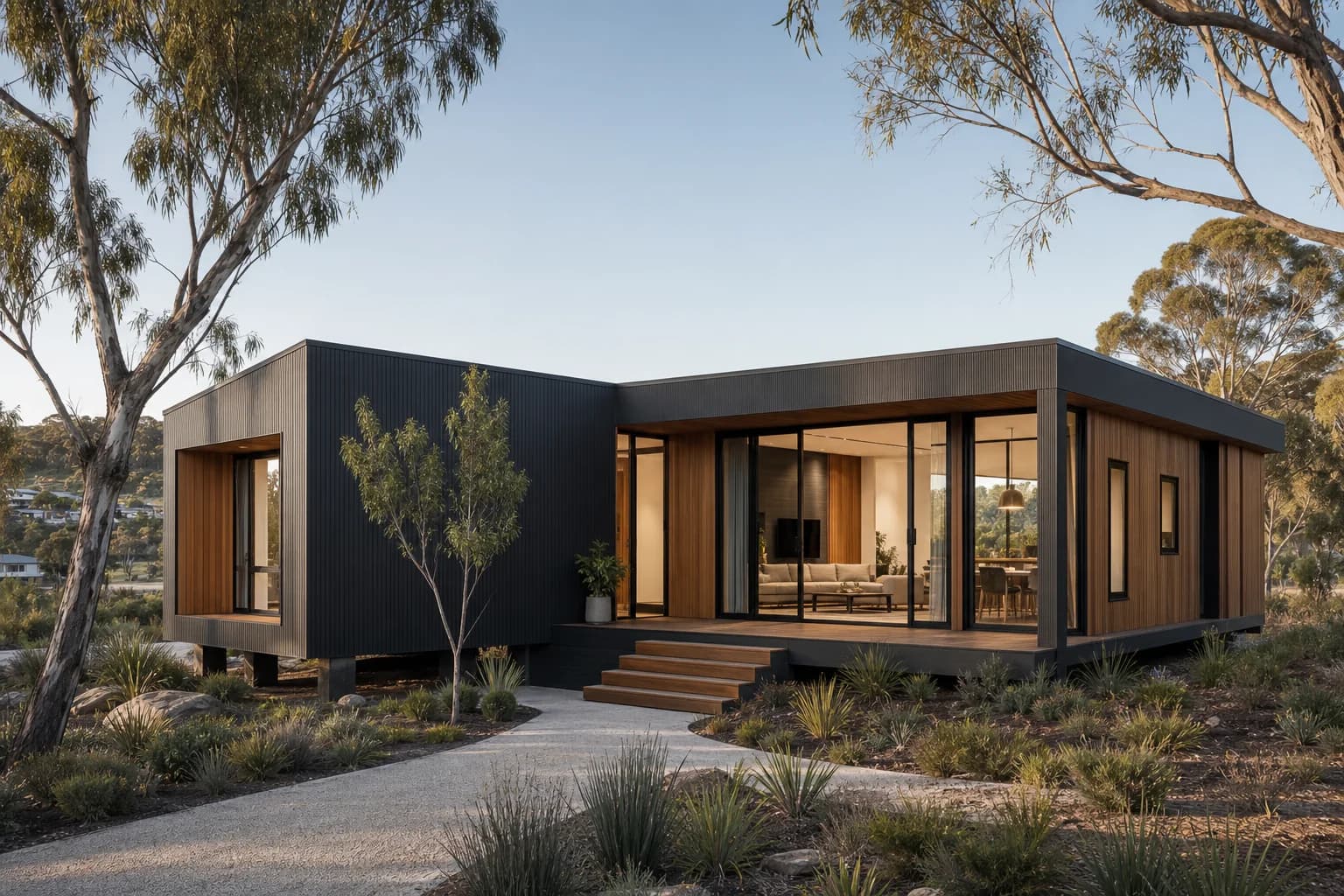
A Class 1a home in Australia is a permanent, habitable residential dwelling as defined by the National Construction Code (NCC). It's the classification that covers the ordinary house — the standard detached home most Australians live in — and it's the single most important term to understand when you're comparing modular homes, granny flats, pods or cabins. Because whether a structure is Class 1a, or something else, decides almost everything: whether you can live in it permanently, whether a bank will finance it, whether a council will approve it as a dwelling, and whether it holds value like a real home. This guide explains what Class 1a means, how it differs from the other building classes, and why it's the classification that matters most.
The short answer
Class 1a is the National Construction Code classification for a standard house. According to the NCC, a Class 1a building is a single dwelling being a detached house, or one of a group of attached dwellings being a town house, row house or the like.
If a structure is Class 1a, it is legally a home. It can be lived in permanently, it's built to residential standards, it's financed like a house, and it's valued like a house. If a structure is not Class 1a — if it's a Class 10 shed, or a movable dwelling on a chassis — it behaves very differently, no matter how much it might look like a home.
That's the whole reason this classification matters: Class 1a is what makes a building a home in the eyes of the law, a bank and a council.
What the National Construction Code is
The National Construction Code (NCC) is the set of standards that governs how buildings are designed and constructed across Australia. It's published by the Australian Building Codes Board (ABCB) and adopted, with some state and territory variations, across the country.
One of the things the NCC does is classify buildings by their use. A house is classified differently from an office, which is classified differently from a warehouse or a shed. These classifications determine which construction, safety, health and energy standards apply to a given building. Building classifications are labelled Class 1 through to Class 10, with some carrying sub-classifications shown by a letter — such as Class 1a.
For residential buyers, the classifications that matter most are Class 1a (a house) and Class 10a (a non-habitable structure like a shed or garage). The difference between these two is the difference between somewhere you can live and somewhere you can't.
The NCC building classes, in plain English
Here's a summary of how the NCC classes work, based on the ABCB's official building classifications. The residential ones are what matter most for a home buyer.
| Class | What it is |
|---|---|
| Class 1a | A single dwelling — a detached house, or one of a group of attached dwellings such as a town house, row house or villa unit |
| Class 1b | A boarding house, guest house or hostel with a floor area under 300m² and ordinarily fewer than 12 people; or 4+ single dwellings on one allotment used for short-term holiday accommodation |
| Class 2 | A building containing two or more dwellings, each generally solely occupied — apartment buildings |
| Class 3 | Long-term or transient residential accommodation for people other than in a single dwelling or Class 1/2/4 (e.g. larger hotels, hostels) |
| Class 4 | A single dwelling within a building that is otherwise a different class (e.g. a caretaker's residence above a shop) |
| Class 5–9 | Non-residential — offices, shops, warehouses, factories, healthcare buildings, schools, assembly buildings |
| Class 10a | A non-habitable structure — a private shed, garage or carport |
| Class 10b | A structure such as a fence, mast, antenna, retaining wall or swimming pool |
| Class 10c | A private bushfire shelter associated with a Class 1a dwelling |
A useful fact: Class 1 buildings cannot be located above or below any other dwelling or building class, other than a private garage. This is part of what keeps Class 1a specifically about standalone or attached houses, rather than apartment-style living (which falls under Class 2).
For most people building a modular home, granny flat or backyard dwelling, the question is simply: is it Class 1a (a home you can live in) or Class 10a (a non-habitable structure)?
How the NCC is organised
The NCC is published in three volumes. Broadly:
- Volume One covers Class 2 to 9 buildings — the non-residential and multi-unit classes
- Volume Two covers Class 1 and Class 10 buildings — standalone houses, attached dwellings, sheds and other structures
- Volume Three covers plumbing and drainage requirements across all building classes
For a Class 1a home, Volume Two is the primary reference, alongside Volume Three for plumbing.
Class 1a vs Class 10a: the distinction that decides everything
This is the comparison that matters most, because it's where buyers get caught out.
A Class 1a building is a habitable dwelling. It's built to residential standards — structural, fire, energy efficiency, ventilation, natural light, sanitation — and it's approved for people to live in.
A Class 10a building is non-habitable. It's the classification for a private shed, garage or carport. It can be insulated, powered and beautifully finished, but it is not approved for someone to live in, cannot be lawfully rented as accommodation, and won't be valued as living space by a bank or valuer.
| Class 1a (home) | Class 10a (non-habitable) | |
|---|---|---|
| Can you live in it? | Yes | No |
| Built to residential standards | Yes | No |
| Can be rented as a dwelling | Yes | No |
| Financed like a house | Yes | No |
| Adds assessed dwelling value | Yes | Limited |
| Examples | House, granny flat, modular home | Shed, garage, basic cabin, office pod |
The trap is that a Class 1a home and a Class 10a structure can look almost identical from the outside. A backyard "office pod" and a backyard "granny flat" might be the same size and shape — but one is a shed you can't live in, and the other is a home you can. The difference is the classification and the standards behind it, not the appearance.
What makes a home Class 1a
To be classified as Class 1a, a dwelling must be built to the residential standards of the National Construction Code. In broad terms, that includes:
- Structural integrity — engineered to the loads of its location, including wind and, where relevant, bushfire (BAL) requirements
- Fire safety — meeting residential fire and smoke alarm standards
- Energy efficiency — under NCC 2022, a 7-star NatHERS-equivalent thermal rating plus a Whole-of-Home energy budget for fixed appliances. This has been adopted, with state-specific variations, in every state and territory except Tasmania and the Northern Territory as of mid-2026. Victoria made it mandatory from 1 May 2024; NSW aligns its BASIX requirements to an equivalent standard from 1 October 2023. Confirm the current position for your state before finalising a design.
- Accessibility — Livable Housing Design provisions, also introduced under NCC 2022 and adopted with state variations (for example, mandatory in Victoria from 1 May 2024). Adoption and detail vary by state — confirm your state's current position.
- Health and amenity — proper ventilation, natural light, and sanitation (a bathroom and usually a kitchen)
- Certified plumbing and electrical — carried out by licensed trades to Australian Standards, covered under NCC Volume Three
A structure that meets these and is permanently fixed to foundations is a Class 1a home. Add proper plumbing and habitable standards to a backyard structure, and it typically moves from Class 10a to Class 1a — which is exactly why adding a bathroom to an "office pod" changes its classification and its approval pathway.
Why Class 1a matters: approval, finance and resale
The classification isn't a technicality — it has three real consequences that affect your money.
Approval. A Class 1a dwelling goes through the residential building approval process for your state. This is what makes it a lawful, permanent home rather than a structure you're not allowed to live in.
Finance. Because a permanent Class 1a home is legally a house, most major Australian lenders — including the big four banks — finance it like any other home. A structure that isn't Class 1a (a movable dwelling, or a non-habitable Class 10a build) often can't be financed the same way, or at all.
Resale and value. A Class 1a home is real property. It's valued by banks and agents like a conventional house, it captures land-driven capital growth, and it resells to a broad market. A non-habitable or movable structure doesn't hold value the same way.
In short: Class 1a is what makes a building a bankable, sellable, liveable home. It's the difference between an asset that behaves like a house and one that doesn't.
Are modular homes Class 1a?
Yes — a permanent modular home fixed to foundations is classified as Class 1a, identical to a conventional site-built house. This is the key point that separates a genuine modular home from a movable or non-habitable structure that might look similar.
It's worth being clear about what is not automatically Class 1a:
- A tiny home on wheels is generally classified as a caravan, not a Class 1a building
- A relocatable or chassis-based dwelling may be classified as a movable dwelling rather than Class 1a
- A portable cabin or office pod is often Class 10a (non-habitable) unless built and certified as a habitable dwelling
- An uncertified imported structure may not be certifiable as Class 1a at all
When you're comparing modular homes, this is the single most useful question to ask: is it a permanent Class 1a dwelling? The answer tells you more about how the home will be approved, financed and valued than any marketing term.
Frequently asked questions
What is a Class 1a home?
A Class 1a home is the National Construction Code classification for a standard house — a single dwelling that is a detached house, or one of a group of attached dwellings such as a town house or row house. It's built to residential standards for structure, fire safety, energy efficiency and amenity, can be lived in permanently, is financed like a house, and holds value as real property. Most Australian houses, and permanent modular homes, are Class 1a.
What's the difference between Class 1a and Class 10a?
Class 1a is a habitable dwelling — a home you can live in, built to residential standards. Class 10a is a non-habitable structure such as a private shed, garage or carport — it can't be lawfully lived in or rented as accommodation, and isn't valued as living space. The two can look similar, but only Class 1a is approved as a home.
Are modular homes Class 1a?
A permanent modular home fixed to foundations is classified as Class 1a, identical to a conventional house. However, tiny homes on wheels (caravans), chassis-based movable dwellings, and non-habitable pods or cabins are generally not Class 1a. Whether a modular structure is permanent Class 1a determines how it's approved, financed and valued.
Is a granny flat a Class 1a building?
A permanent, self-contained granny flat (secondary dwelling) built to residential standards is generally classified as Class 1a — which is what allows it to be lived in, rented and valued as a dwelling. A non-habitable backyard structure without proper habitable standards would be Class 10a and can't lawfully be used as accommodation.
Why does the Class 1a classification matter?
Because it determines whether a structure is legally a home. A Class 1a dwelling can be lived in permanently, is financed like a house by major lenders, is approved by council as a dwelling, and holds value as real property. A structure that isn't Class 1a — non-habitable or movable — behaves very differently for finance, resale and lawful occupation.
Can you live in a Class 10a building?
No. Class 10a is the classification for non-habitable structures such as private sheds, garages and carports. They can't lawfully be used as permanent accommodation. To be lived in, a structure must be built and certified as a habitable dwelling — generally Class 1a — which requires meeting residential standards including proper plumbing, energy efficiency and amenity.
The bottom line
Class 1a is the classification that turns a structure into a home. It's the NCC definition of a single dwelling built to residential standards — and it's what determines whether you can live in a building permanently, finance it like a house, gain council approval as a dwelling, and hold value like real property. When you're comparing modular homes, granny flats, pods or cabins, the marketing terms matter far less than one question: is it a permanent Class 1a dwelling? Everything that matters financially and legally flows from the answer.
Every ModuHaus permanent home is built to Class 1a standards — a genuine, bankable, council-approvable home, not a movable or non-habitable structure that merely looks like one. If you want to understand how Class 1a applies to your project and site, a Planning Assessment is the clearest place to start.
Start your Planning Assessment →
This article is general information only and not legal, building or financial advice. Building classifications are defined by the National Construction Code (ncc.abcb.gov.au) and applied by state and territory authorities, which may adopt variations. Energy efficiency and Livable Housing Design requirements in particular vary by state and are updated periodically. Always confirm the current classification and requirements applicable to your project with your local council, a registered building surveyor, or the ABCB before proceeding.
Last updated: 16/07/2026. Verified against ncc.abcb.gov.au on 23/07/2026.
Sources and further reading
Requirements change and can be applied differently by site and local authority. Check the current official sources and confirm your project with the relevant council, certifier or qualified professional.